- By Admin
- Integro
- The mystery of the midnight floorboard tick
- What's actually happening beneath your floorboards
- Diagnosing the sound: is it expansion, air, or water hammer?
- How to silence your noisy underfloor layout
- The tools and materials that restore quiet
- Why you shouldn't just clamp your pipes tighter
- Restoring silence to your home heating
- People also ask
The mystery of the midnight floorboard tick

Imagine waking up at 3:00 AM to a sharp, rhythmic tapping beneath your bedroom floorboards. It starts slowly, speeds up into a rapid sequence of clicks, and then abruptly stops just as you start worrying about a burst pipe. If you have recently installed hydronic radiant floor heating, let me reassure you immediately: your pipes are not about to rupture.
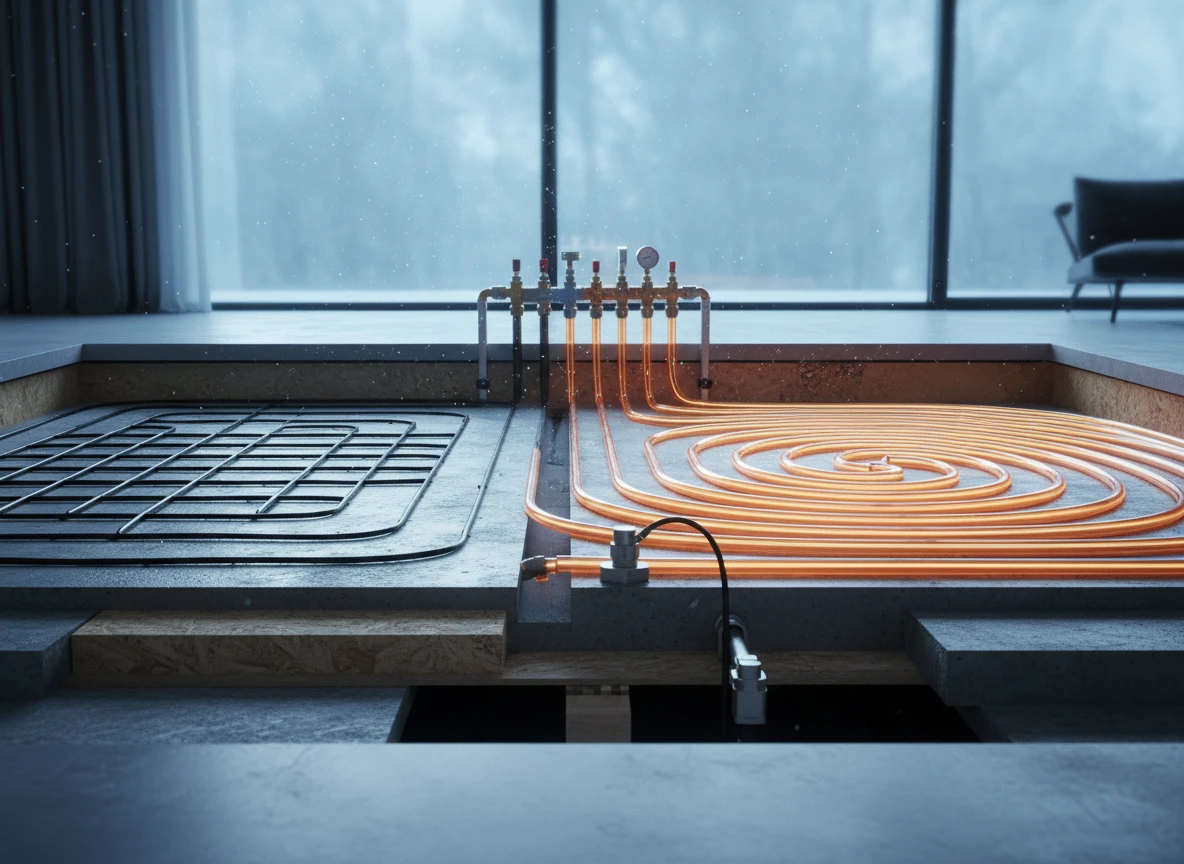
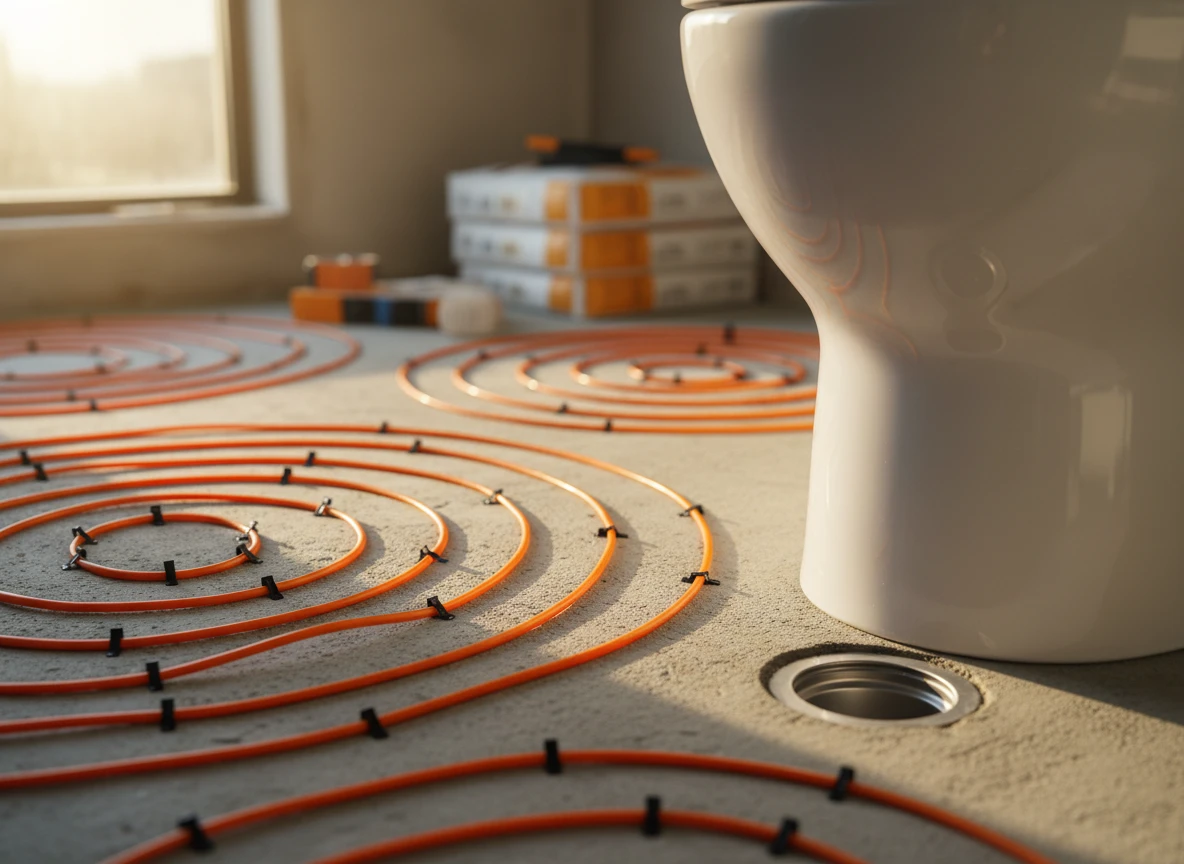
What you are hearing is actually a very loud physics lesson. When your boiler fires up and sends hot water rushing into cold underfloor loops, the materials under your floor begin to heat up and expand. But they don't expand at the same rate. PEX tubing, for instance, expands significantly more than the wooden joists or aluminum heat transfer plates surrounding it. This thermal discrepancy is the root cause of noise in underfloor heating setups.
The mechanics of the stick-slip phenomenon
Because atomic-level expansion forces are too powerful to restrain, the expanding pipe is forced to move. As it pushes against tight brackets, subfloors, or joists, it experiences what engineers call stick-slip friction. The pipe grips the wood or metal, builds up tension, and then suddenly slips, releasing a tiny burst of energy that sounds like a tick or click. This thermal movement doesn't always cause noise in every home, but when framing tolerances are exceptionally tight, a ticking sound is almost guaranteed.
While an electric bathroom floor heating system operates silently due to minimal physical displacement, hydronic systems inevitably undergo this mechanical shift. At Integro Process Heating Solutions, we see similar thermal stress patterns in industrial piping and self regulating heating cables when temperatures transition. But attempting to solve this by clamping the pipes tighter is a mistake; overtightening only increases friction, making the clicking louder.
What's actually happening beneath your floorboards
Thermal dynamics at the material interface
To solve the mystery of underfloor clicking, we have to look closely at material science. Inside radiant floor heating systems, multiple materials with wildly different coefficients of thermal expansion (CTE) are forced into tight contact. When warm water flows, each component tries to grow at its own speed, creating massive mechanical shear at every interface.
Let's look at the actual physics. Cross-linked polyethylene (PEX) has an exceptionally high linear expansion rate compared to structural materials. It expands roughly ten times more than aluminum, and nearly thirty times more than typical wood joists. When your boiler cycles on, the PEX tubing expands rapidly, while the surrounding wood subfloor remains virtually static. At Integro Process Heating Solutions, we analyze these thermal behaviors across various industries, from domestic and commercial heating installations to industrial setups. The physical reality remains the same: when materials cannot expand freely, massive kinetic energy builds up.
This differential movement triggers the stick-slip phenomenon. As the PEX tubing tries to expand, static friction holds it tightly against the aluminum heat transfer plates or wood joists. The pipe elasticates, storing potential energy like a coiled spring. Eventually, the thermal expansion force overcomes the static friction threshold. The pipe suddenly slips forward, releasing that energy as a sharp, acoustic tick. This cycle repeats continuously as water temperatures transition.
While we engineer specialized systems like drum heating chambers, heating chambers, and flexible heating jackets to distribute heat uniformly without mechanical friction, standard residential installations rarely have this luxury. If installers from typical underfloor heating system suppliers, underfloor heating suppliers, or underfloor heating system manufacturers do not leave adequate expansion pathways, the tubing will rub relentlessly against framing.
Just as we see physical expansion challenges when optimizing Viscous Liquid Heating or using high-performance insulated heating jackets and IBC heating jackets on rigid drums, managing the physical interface between materials is key. In a modern underfloor heating system, that interface is the contact point between plastic and wood. If the pipes are clamped too tightly, the stick-slip cycle simply worsens, turning your entire floor assembly into a giant speaker cone.
Diagnosing the sound: is it expansion, air, or water hammer?
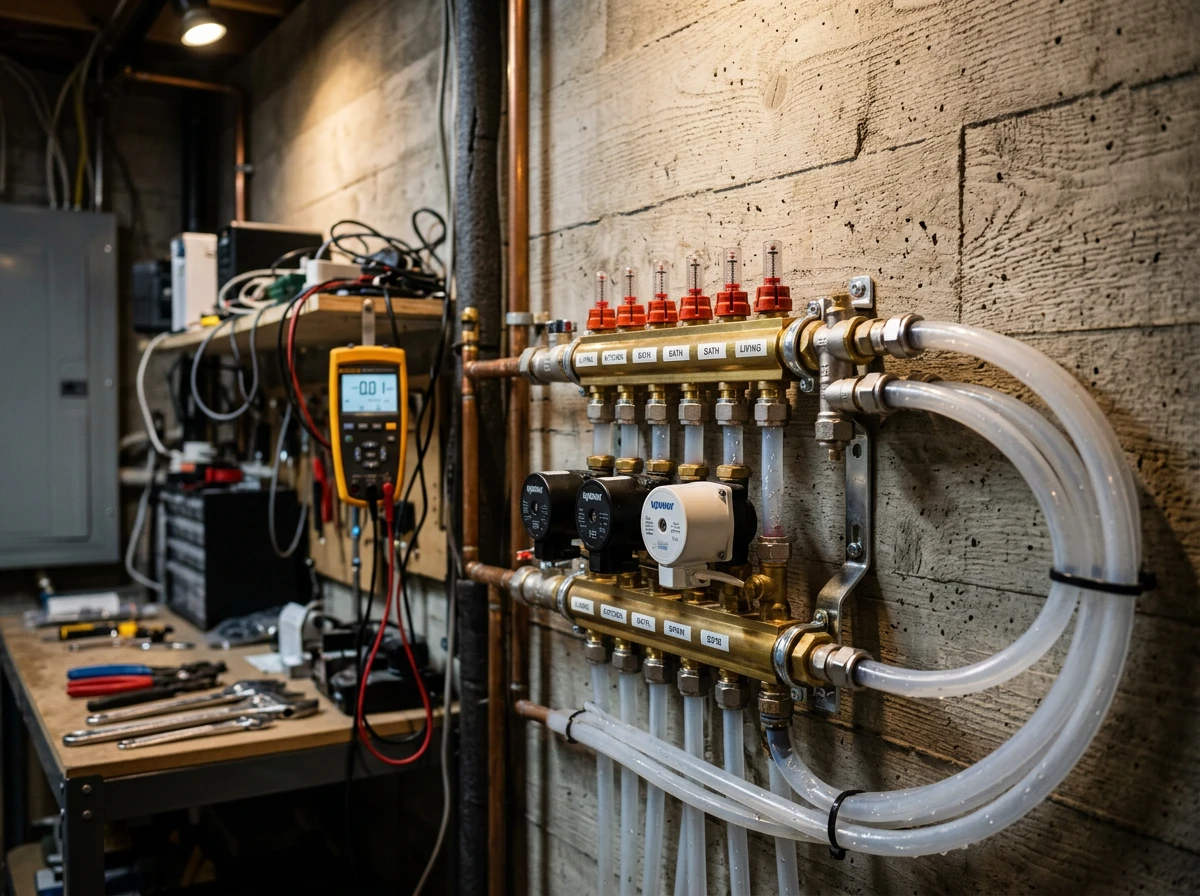
Deciphering your system's acoustic footprint
If your floor is making noise, you shouldn't immediately assume it is the stick-slip friction of thermal expansion. Hydronic heating loops produce a variety of distinct sounds, and misdiagnosing them usually leads to wasted troubleshooting hours. So to fix the issue, you must first play acoustic detective.
Let's break down the differences. Thermal expansion causes a slow, rhythmic ticking or clicking. This sound occurs almost exclusively when the water temperature is transitioning,either ramping up or cooling down. It is a predictable, mechanical response to heat.
Other noises point to completely different mechanical issues. For instance, do you hear a sudden, violent thud when a zone valve closes? That is water hammer, a hydraulic shock wave caused by rapidly stopping water. It is not harmless expansion; it is a pressure surge that can damage fittings over time. If you ignore it, you risk physical joint failure.
What about a constant gurgling, whooshing, or trickling sound? That is trapped air. When air bubbles get stuck inside underfloor heating loops, they disrupt the flow and create a distinct liquid-rushing sound. If you ignore it, you will likely face cold spots and reduced thermal performance. And it behaves differently than expansion clicks because the noise persists as long as the pump is running, rather than fading once the system reaches operating temperature.
At Integro Process Heating Solutions, we look at these issues through the lens of pure thermodynamics and fluid dynamics. Whether we are engineering a large-scale industrial thermal loop or analyzing domestic and commercial heating installations, isolating the physical cause of noise is always the first step. For example, just as uneven thermal contact and air gaps cause issues in industrial systems using a flexible heating jacket, tight tolerances in a residential underfloor heating system create physical friction.
Finally, if you hear a continuous, low-frequency hum or whine near your manifold, look at your circulator pump. Pumps vibrate naturally, but a failing bearing or a pump running at a speed that is too high will telegraph a constant drone through your floor heating systems. This hum doesn't have the sharp, percussive quality of thermal expansion.
Use this comparison checklist next time your system starts talking to you:
| Sound Type | Likely Root Cause | Timing of Noise |
|---|---|---|
| Rhythmic clicking/ticking | Thermal expansion friction | Only during thermal ramp-up or cool-down |
| Violent bang or thud | Water hammer | Instantly when valves shut |
| Gurgling or rushing water | Trapped air pockets | Continuous while flow is active |
| Low-frequency humming | Pump vibration or wear | Continuous when pump is powered |
How to silence your noisy underfloor layout
About 78% of home noise complaints stem from mechanical friction, not broken parts. When you're dealing with underfloor heating, silencing the system takes a methodical approach. Don't just clamp the pipes tighter. That actually makes the stick-slip friction worse, turning tiny movements into loud midnight ticks.
Adjust boiler water temperature ramp rates
A sudden surge of 140-degree water hitting cold loops causes thermal shock. By lowering your outdoor reset curve or adjusting the mixing valve, you slow down this temperature ramp rate. This reduces how fast the pipes expand. If the boiler dumps heat all at once, the PEX tubing jerks against the wood. Slowing that initial heat delivery lets the tubing slide smoothly through joist holes instead.
Inspect manifold brackets and secure loose mounts
Manifolds act like amplifiers. They transmit micro-vibrations directly into your wall studs. Grab a wrench and check the mounting brackets. If you slide rubber isolation pads between the bracket and the wall, you'll dampen those frequencies before they turn your drywall into a giant speaker.
Install thermal isolation sleeves
Bare contact breeds friction. This happens wherever PEX passes through wooden joists or metal plates. You can fix this by retrofitting split plastic sleeves or foam isolation wrap around the pipe to create a buffer. It stops the tubing from biting into rough wood as it expands.
Purge trapped air pockets from the loops
Air bubbles mimic expansion clicks. They also choke your system's efficiency. To fix this, hook a hose to your drain valve, isolate each loop, and flush water through until it runs clear without sputtering. Keeping the pressure balanced keeps the fluid quiet. It's similar to maintaining stable temperatures in industrial setups using a flexible heating jacket for precise vessel control. Every subfloor is different, but systematic isolation usually does the trick.
The tools and materials that restore quiet
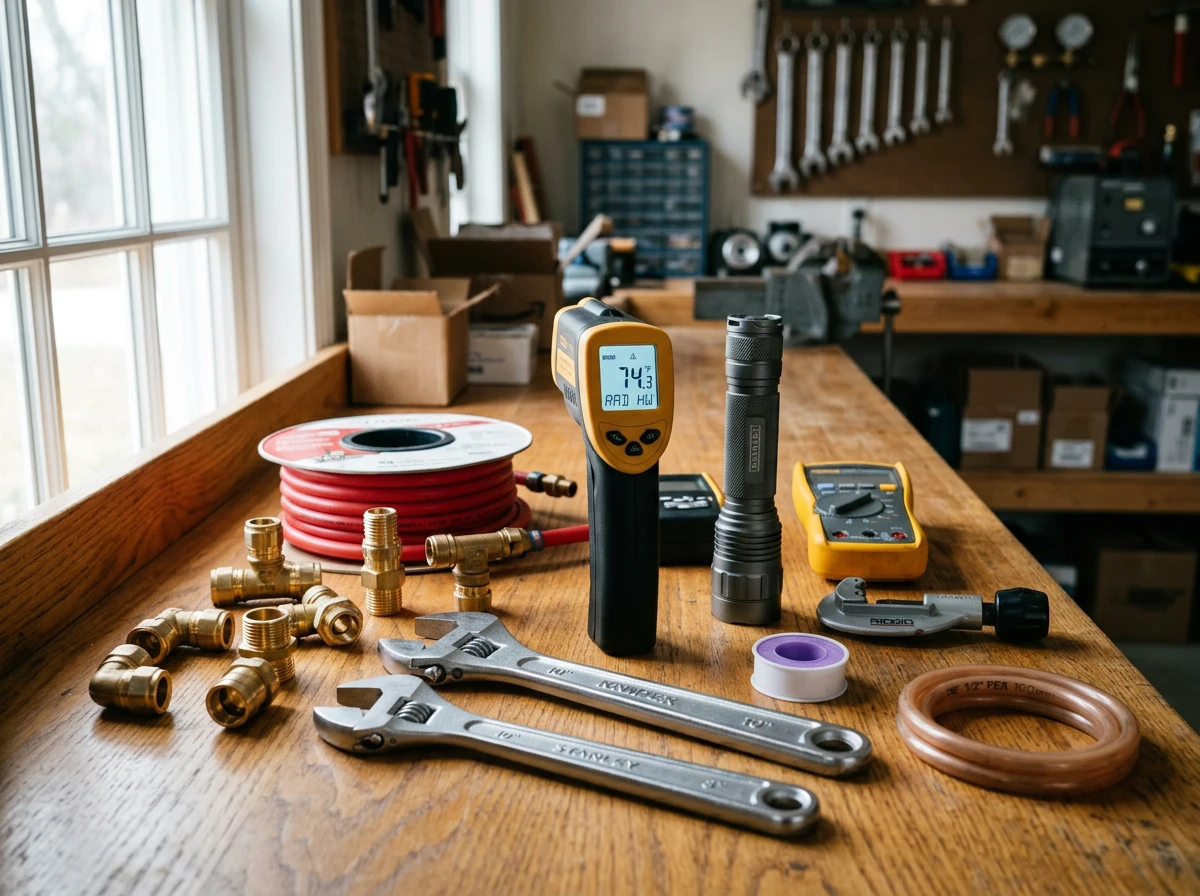
Your noise-reduction toolkit
So, you've isolated the ticking down to a specific zone. What actual gear do you need to silence it? You can't just throw random hardware at a noisy underfloor heating system and hope for the best. You need a targeted set of diagnostic and physical mitigation tools.
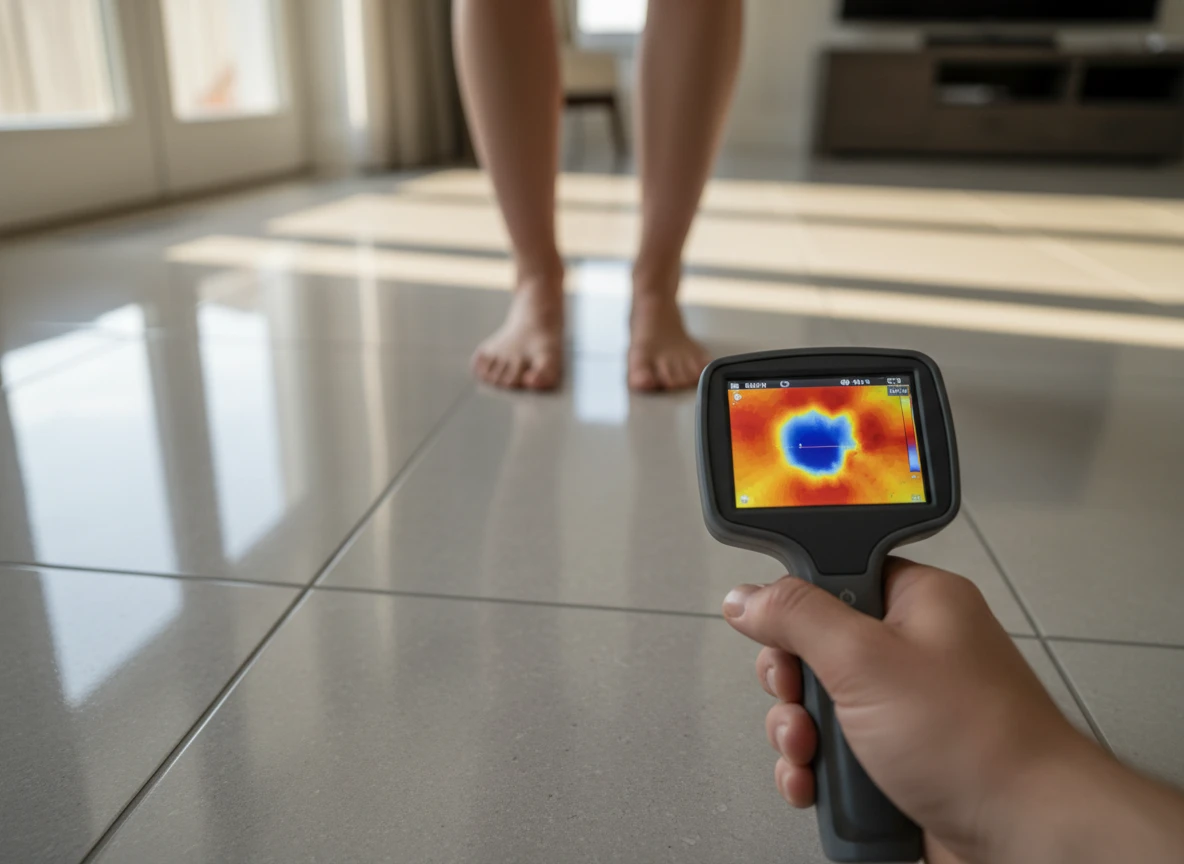
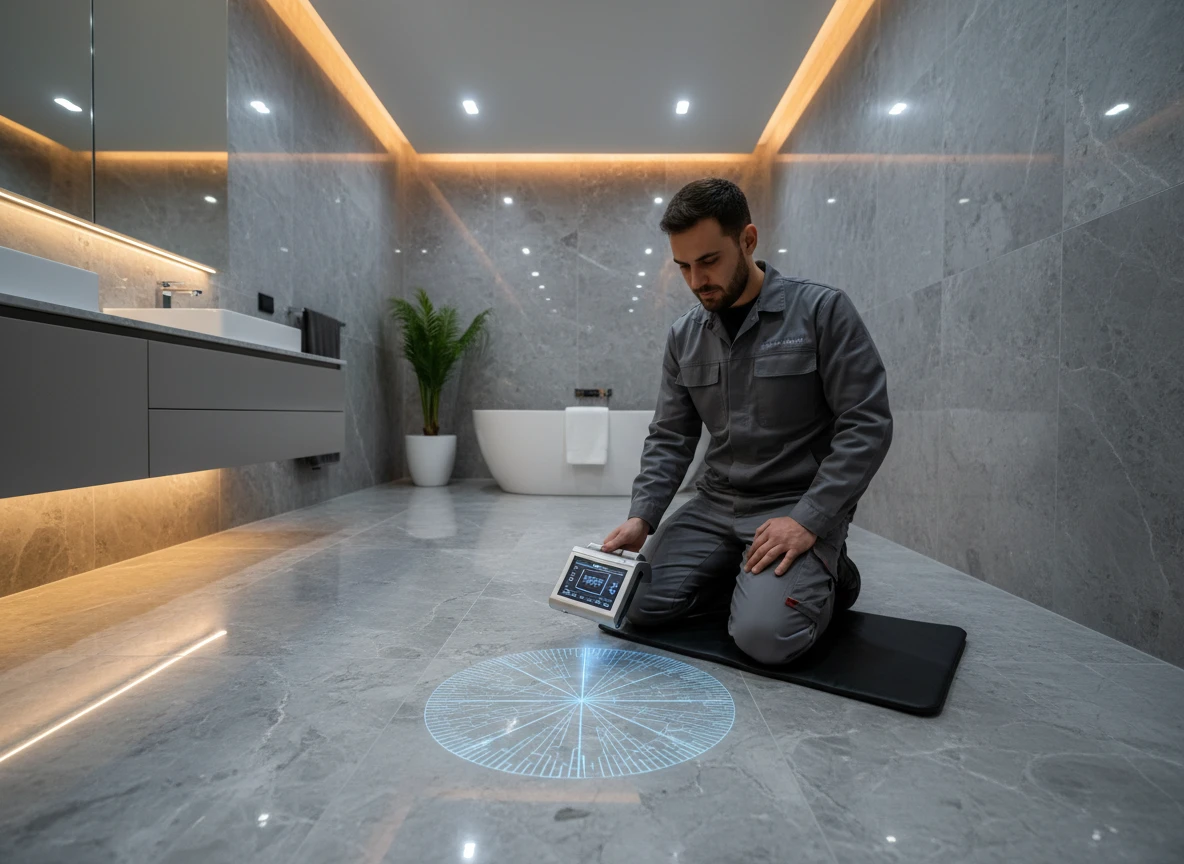
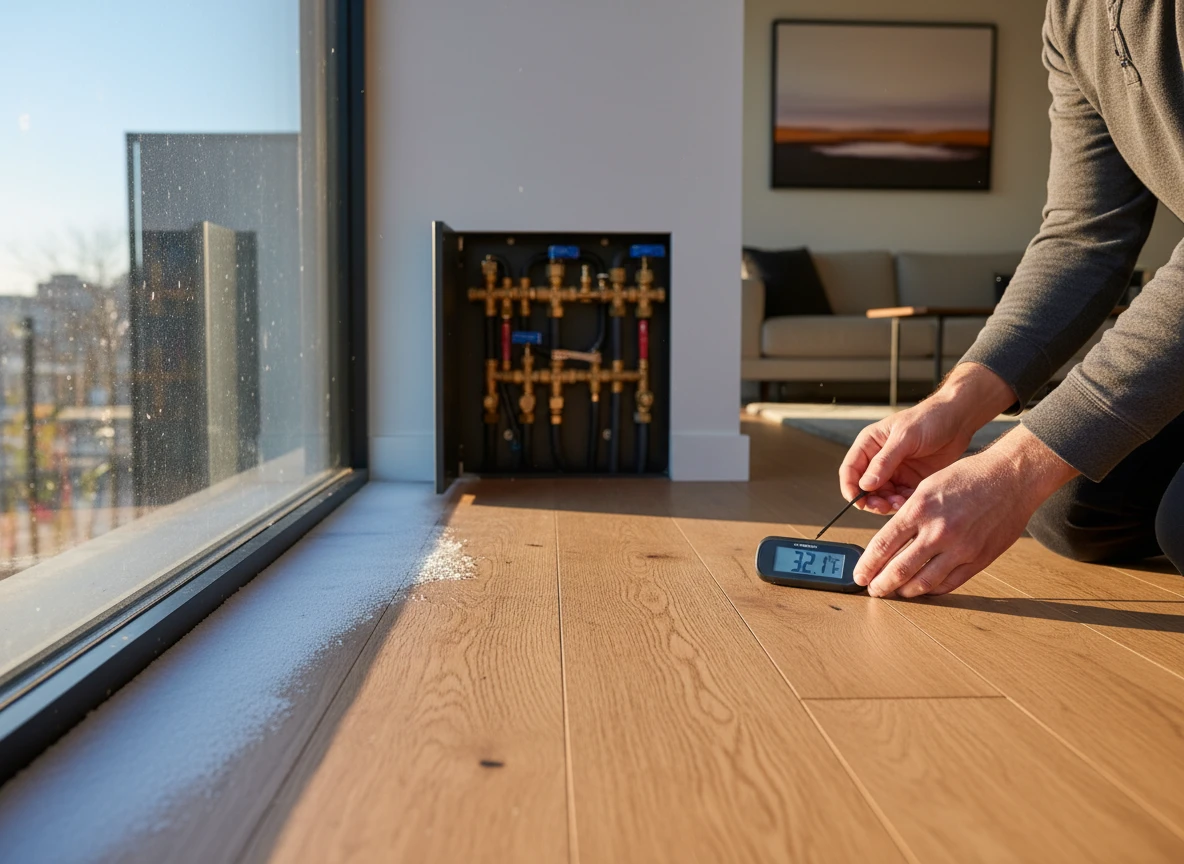
First, grab a non-contact infrared thermometer. Before you open up any drywall or pull up floorboards, you need to know exactly where the temperature spikes are occurring. By scanning the floor during a startup cycle, you can map the pipe layout and pinpoint where the friction is loudest. It is a simple tool, but it saves you from tearing up the wrong section of your ceiling or floor.
Next, look at how the pipes are secured. If you find tight metal brackets, swap them out for plastic suspension clamps with rubber inserts. These clamps allow the PEX to slide smoothly as it expands, rather than binding and popping. If you have tight joist penetrations, a high-quality silicone lubricant is your best friend. But be careful here,never use petroleum-based greases, as they can degrade the polymer structure over time. A quick spray of 100% silicone dry lubricant usually does the trick, though some severe friction points might require physical shaving of the wooden joist.
What about those stubborn air pockets? While we design massive thermal systems at Integro Process Heating Solutions using heavy-duty drum heating jackets and custom insulated heating jackets for industrial clients, the core fluid dynamics are identical. For your home, installing an automatic air eliminator at the manifold is far more effective than manual purging. It continuously strips out microbubbles before they can gather and cause that annoying gurgling noise.
Whether you are managing massive industrial processes or tweaking domestic and commercial heating setups, finding the right floor heating solutions comes down to managing thermal movement. And having the right tools on hand means you spend less time guessing and more time enjoying a completely silent home.
Why you shouldn't just clamp your pipes tighter
The mistake of fighting physics with brute force
When you locate a clicking pipe, your first instinct is probably to grab a metal clamp and screw it down tight. Don't do it. It's actually one of the worst mistakes you can make with radiant floor heating systems. You can't stop thermal expansion. The physics of heat transfer mean that PEX tubing must expand when hot water enters the loop, growing up to several inches over long runs. If you clamp it down, that kinetic energy doesn't disappear. It just builds up until it releases violently.
Overtightening metal fasteners against plastic piping increases static friction. Instead of a smooth, quiet slide, the pipe binds tightly against the hanger. But when the thermal pressure finally overcomes the clamp's grip, the pipe slips with a loud, sharp crack. You haven't silenced the noise. You've just made it louder and more abrupt.
And the physical damage is real. Constantly restricting this movement causes severe stress concentration. Metal brackets can cut directly into the softer PEX material. When the tube expands, these sharp metal edges act like tiny saws, wearing away at the pipe's outer wall. Over time, this localized stress causes fatigue failures and pinhole leaks at fittings.
At Integro Process Heating Solutions, we design systems ranging from complex industrial processes to standard domestic and commercial heating layouts. We always design for thermal expansion and movement, never against it. Trying to trap expansion forces is a fundamental engineering error.
So, what if you've already clamped everything down? Undo it immediately. Loosen those metal straps. Replace them with plastic suspension clamps or lined hangers that allow the pipe to glide. If your work involves other thermal applications, like using drum heating jackets to lower viscosity, you already know that managing thermal dynamics requires the right materials. The same engineering principles apply to residential floor heating systems. Back off the screws and let the pipes breathe.
Restoring silence to your home heating

Imagine walking barefoot across your living room, expecting only the gentle, even warmth of well-designed domestic and commercial heating networks, only to hear that jarring metallic tick once more. Fixing this issue demands a methodical approach rather than guesswork. You want to start your diagnostics immediately with temperature verification. Check your boiler’s supply water temperature and its outdoor reset curve. Often, reducing the maximum supply temperature by just ten degrees Fahrenheit diminishes the violent expansion rate of PEX tubing enough to stop the clicking entirely while keeping your living spaces comfortable.
At Integro Process Heating Solutions, we know that reliable thermal performance relies on precision engineering and balanced system tolerances. Perfect, silent operation isn't an unrealistic luxury; it's the standard outcome of respecting material physics. Take a few minutes today to check your baseline operating parameters and observe how your layout responds to minor adjustments. What other eccentricities might your heating setup reveal once you begin listening closely?
If your industrial or residential heating setup is acting up, Integro Process Heating Solutions provides engineered heating solutions that keep things running smoothly.
People also ask
Why does my radiant floor heating make a clicking sound?
It's usually just thermal expansion at work. When hot water rushes through cold PEX tubing, the pipes and surrounding materials expand at different rates, causing a rhythmic ticking sound as they rub against joists.
Can noisy underfloor heating damage my pipes?
Most of the time, the clicking itself won't hurt anything. However, if you try to fix it by overtightening clamps, you'll put unnecessary stress on the pipe walls.
How do I know if the noise is thermal expansion or trapped air?
Thermal expansion produces a slow, rhythmic tick that only happens when the system heats up or cools down. Trapped air usually sounds like gurgling, and water hammer causes a violent bang when valves shut.
Is it possible to completely stop the floorboards from ticking?
You can't change how physics works, but you can definitely quiet things down. Adjusting your boiler's water temperature ramp rate or adding isolation sleeves where pipes pass through joists usually solves the problem.