- By Admin
- Integro
- The silent winter bottleneck in cold storage warehouses
- Why cold temperatures trigger an exponential viscosity spike
- The real cost of cold-stiffened fluids on warehouse machinery
- Why traditional quick-fixes do more harm than good
- A tale of melted plastic: matching container types to thermal limits
- Bands, blankets, and base heaters: choosing the right setup
- Securing your warehouse lines before the next cold snap
- FAQ
The silent winter bottleneck in cold storage warehouses
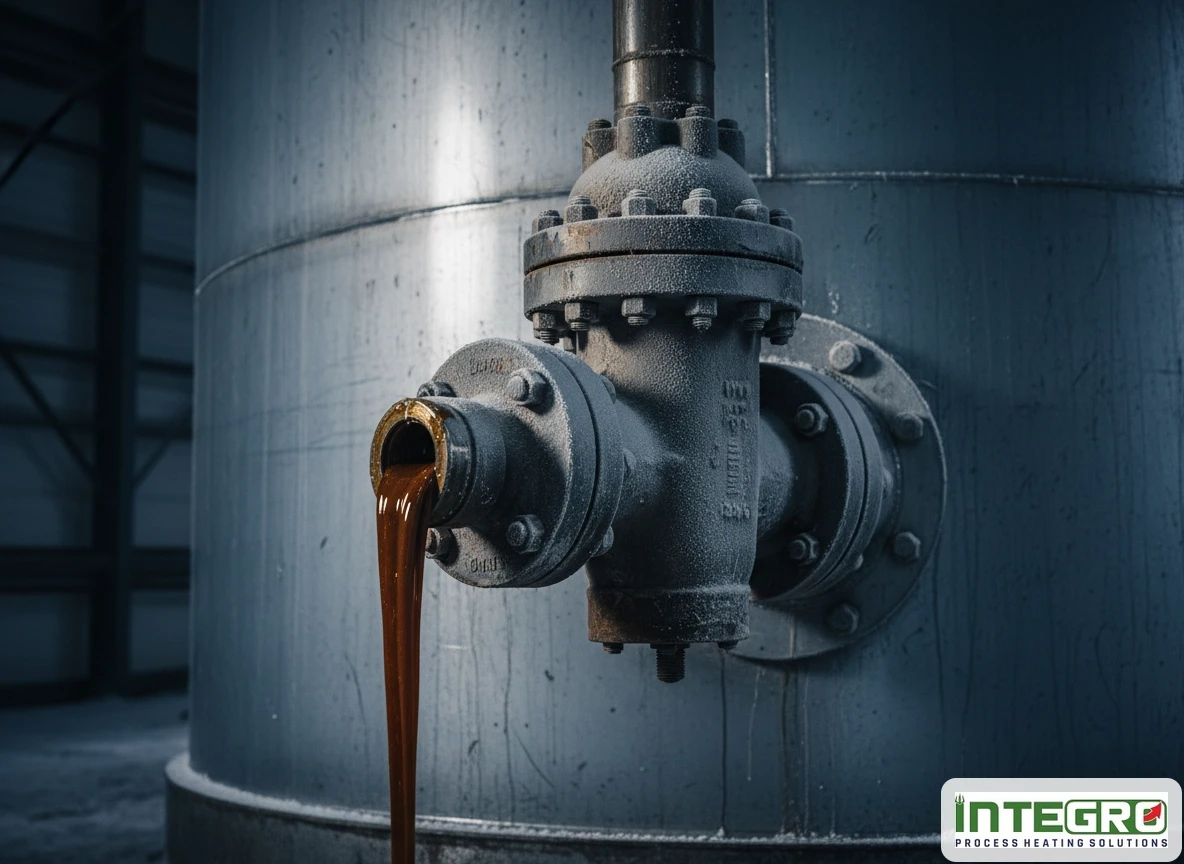
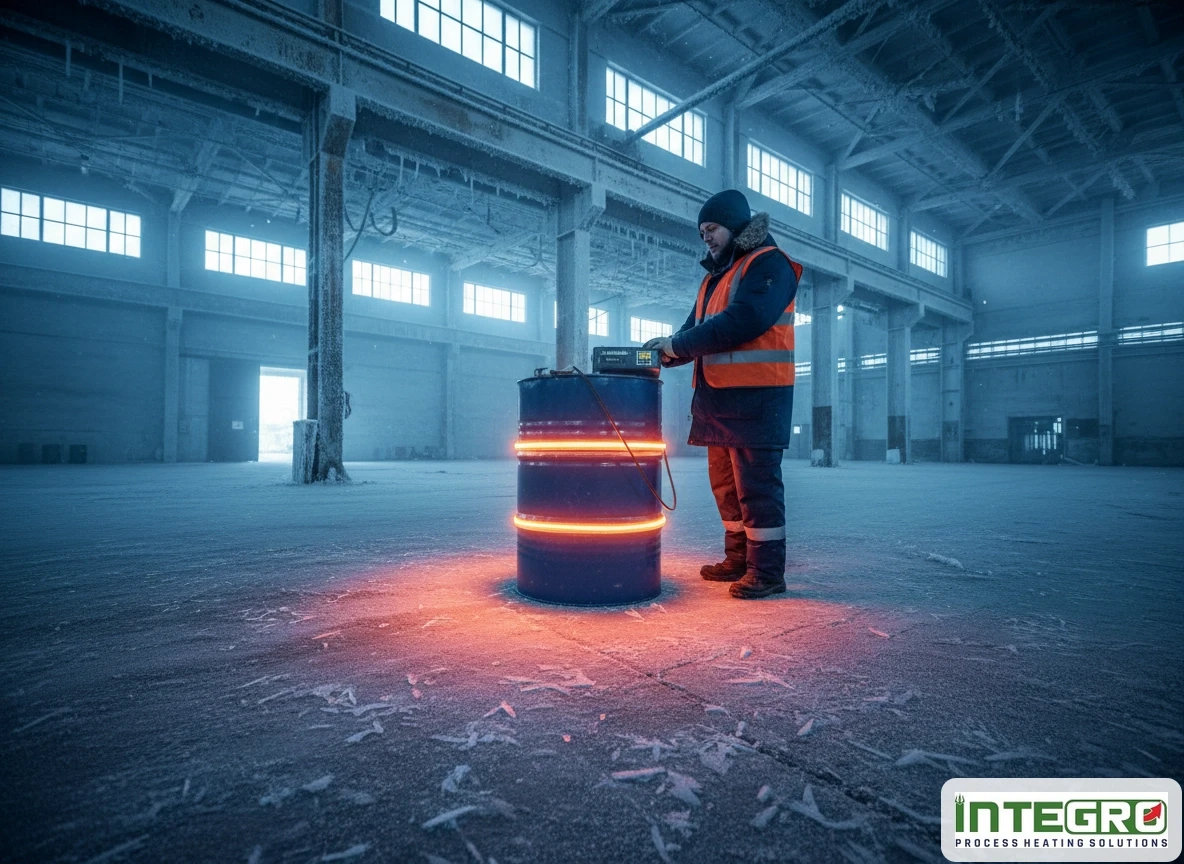
Walk into an unheated storage facility in mid-January, and you will hear the exact moment a transfer pump destroys itself. When ambient temperatures drop, the fluid dynamics inside your containers change completely. Fluid viscosity does not scale linearly with the thermometer. A minor temperature dip can turn heavy petroleum oils into un-pourable sludge, while honey crystallizes and industrial epoxies refuse to flow.
This isn't just a minor inconvenience. It is an operational nightmare. When your team tries moving these cold liquids, pump suction pressure often drops below the liquid vapor pressure. The resulting cavitation literally pits your impellers and burns out motors before production even begins.
So, what do operators typically do? They panic and grab whatever generates heat.
I have seen facilities slap rigid steel bands onto high-density polyethylene (HDPE) containers, rapidly melting the plastic walls and ruining the entire batch. Others try makeshift hot water baths or aim cheap space heaters at the side of a tote. Honestly, these methods might work occasionally, but the results vary wildly and usually lead to scorched compounds. Applying heat exclusively at the top of a drum rather than using base heaters ignores basic thermodynamics.
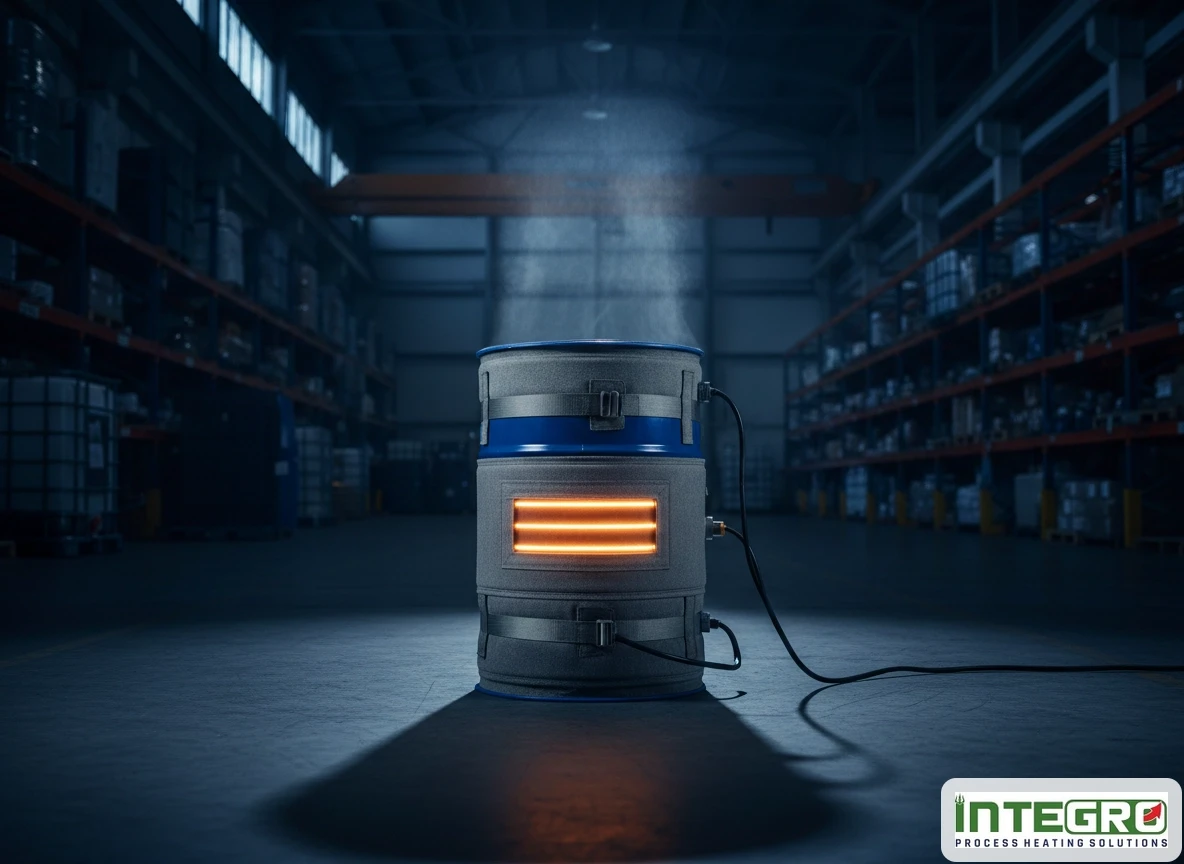
You need controlled, targeted thermal management. Proper Temperature Maintenance for Drums prevents these exponential viscosity spikes. At Integro Process Heating Solutions, we constantly replace hazardous makeshift setups with Drum Heating Chambers or precision industrial drum heaters equipped with digital safety limiters. For uniform phase-change melting, a flexible heating jacket provides full-surface coverage without the risk of localized scorching. When you handle the Heating of Viscous Liquids correctly, you cut internal shear resistance in half. This translates directly to lower maintenance costs and zero wasted materials.
Why cold temperatures trigger an exponential viscosity spike
Cavitation isn't just a mechanical failure. It's a direct consequence of fluid physics under thermal stress. While most operators assume cold-induced thickening happens at a steady, predictable rate, the reality is far more aggressive.
The non-linear math of fluid thickening
Viscosity scales exponentially, not linearly. If you drop the ambient temperature of heavy petroleum oil or industrial resin by just 5°C, its internal shear resistance multiplies. As molecular kinetic energy plummets, fluid layers lock together. Suddenly, your standard transfer pump is choking on sludge. The suction pressure dips below the liquid's vapor pressure, which causes the destructive pitting we see every winter.
Fixing this requires precise thermal management. But applying heat has its own physics traps. For instance, you can't just blast a 55-gallon high-density polyethylene (HDPE) container with a rigid steel band heater. You'll melt the plastic long before the core temperature even budges. Safe drum heating needs controlled, uniform energy transfer.
When we consult on these failures at Integro Process Heating Solutions, we immediately throw out makeshift hot water baths and hazardous space heaters. The solution is simple: wrap the entire thermal load. Using flexible heating jackets makes sure phase-change melting happens uniformly across the container wall. For bulk storage, a dedicated IBC heating jacket stops outer edges from scorching while the center remains a solid, un-pourable block.
Hardware matching is non-negotiable. As manufacturers of drum heating jackets, we design systems based on container material. Metal drums handle high watt densities, so standard industrial drum heaters work fine. Plastics, however, require the distributed wattage of insulated heating jackets to prevent hot spots. We work globally as exporters of drum heating jackets and partner with local suppliers of drum heating jackets to swap out dangerous open flames for digital, thermostatically controlled systems.
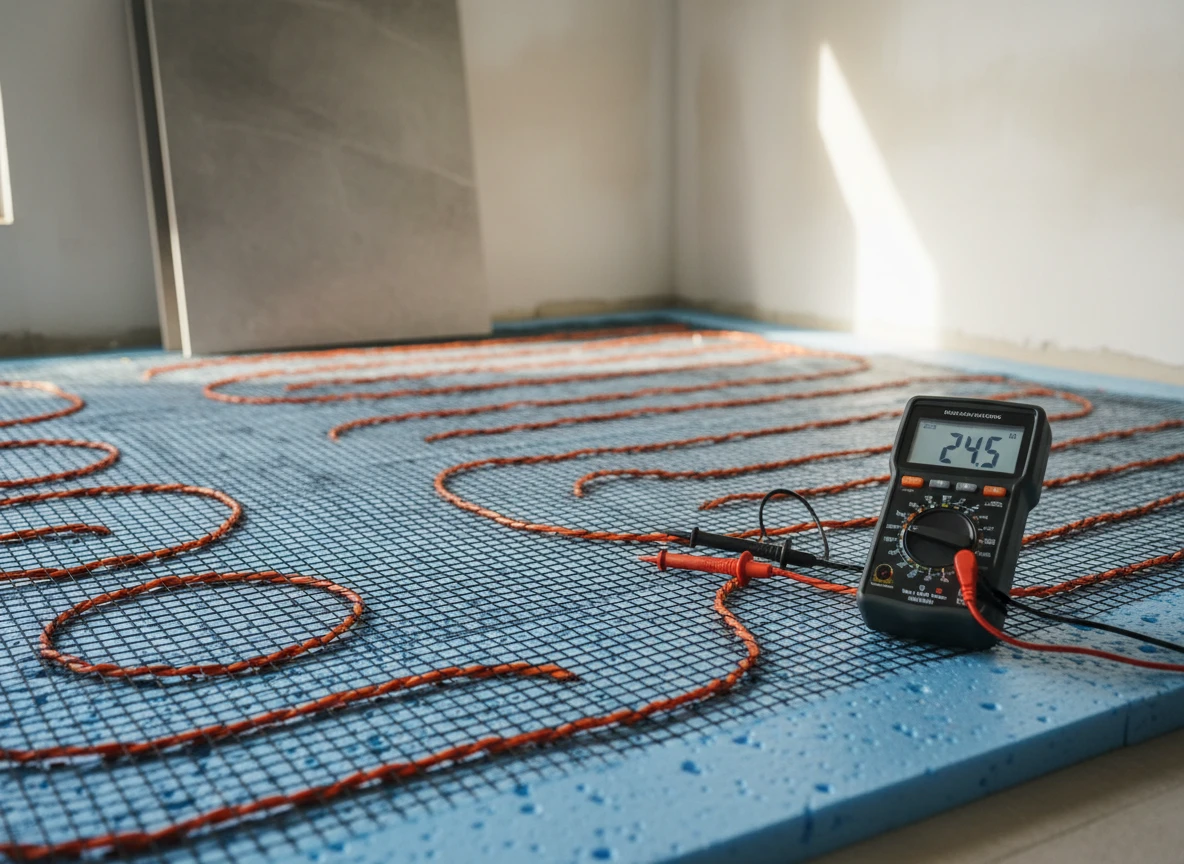
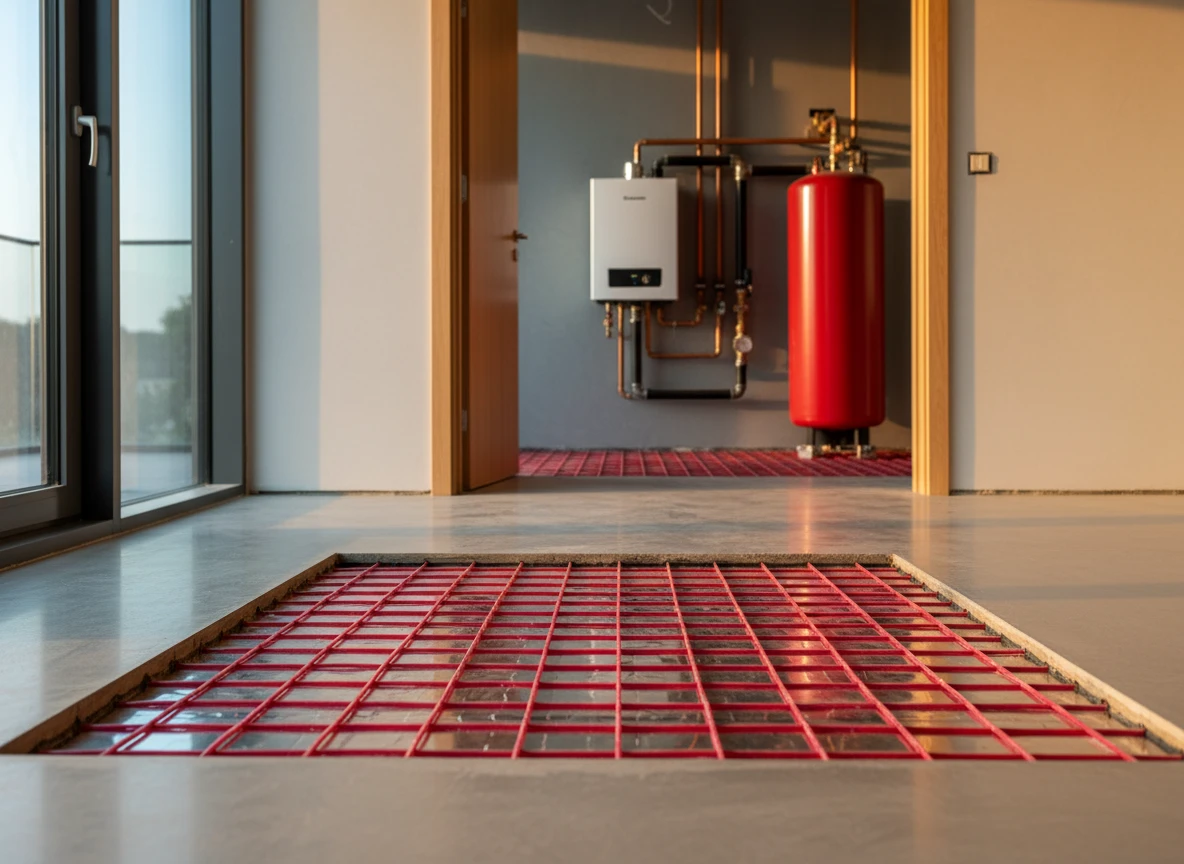
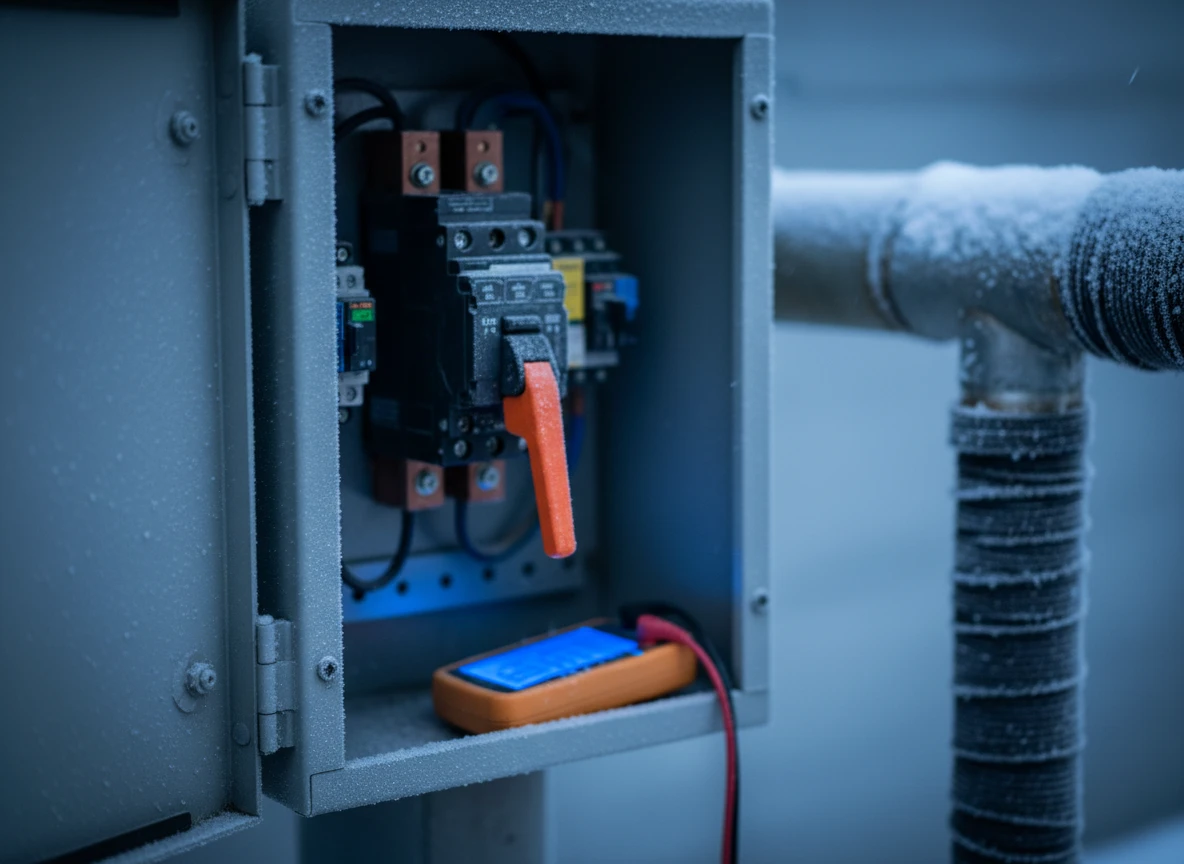
Don't forget that thermal loss extends beyond the container itself. Cold concrete floors will sap heat directly from the bottom of your tanks. In these cases, working with manufacturers of underfloor heating system technology to install an active underfloor heating system creates a critical thermal barrier. If your connecting pipelines freeze, a standard self regulating heat trace often fights an impossible battle against ambient drops. The result? Tripped breakers instead of flowing material.
The real cost of cold-stiffened fluids on warehouse machinery
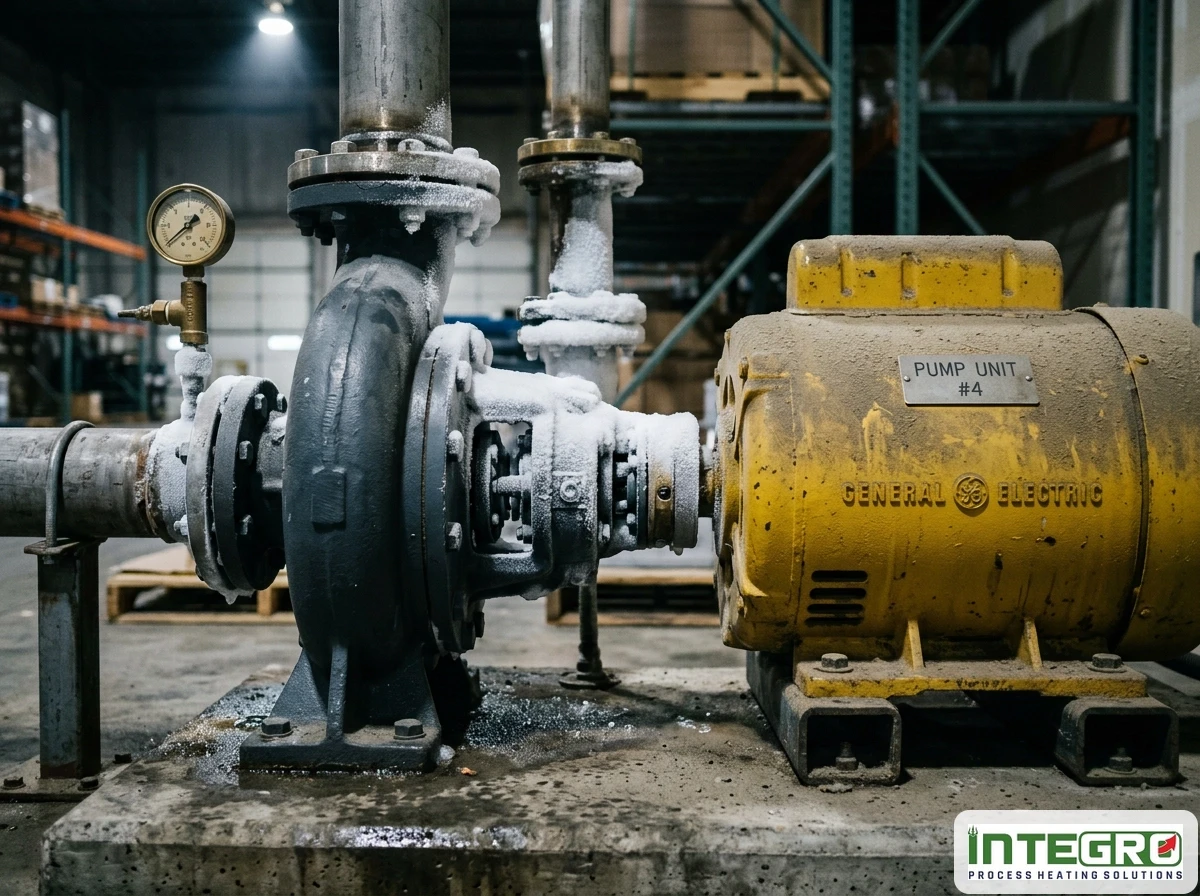
A massive jump in internal shear resistance does more than slow down your pouring speed. It destroys pumps. When heavy petroleum oils turn to sludge, the mechanical toll is immediate and expensive.
Cold, thick fluids drag down suction pressure. If it drops below the liquid's vapor pressure, cavitation starts. Vapor bubbles form and collapse violently against metal parts, pitting the impellers and ruining tolerances. I've seen centrifugal pumps chewed to pieces in weeks simply because operators tried to push cold industrial epoxies through a cold system.
Then there is the electrical strain. Motors draw massive amperage trying to spin against the dead weight of crystallized honey or stiffened resins. The motor burns out. The line stops. You cannot brute-force cold-stiffened liquids.
Matching thermal management to the asset
Getting improved pumpability of materials requires targeted thermal management. High-intensity, unmonitored heat is a common mistake. For example, clamping rigid steel band heaters onto plastic containers usually melts the plastic walls before warming the fluid inside.
At Integro Process Heating Solutions, we match the thermal transfer method directly to the container type. Using full-surface drum heating jackets delivers uniform heat. This thins the material without localized scorching or hot spots.
For bulk storage, wrapping containers in an IBC heating jacket provides the specific wattage needed to keep heavy liquids moving. It's a simple fix. If you handle sensitive chemical compounds, custom insulated heating jackets protect your inventory from sudden temperature drops.
If the warehouse floor is freezing, installing underfloor heating systems maintains a baseline temperature. Some plant managers offset these winter heating costs by routing excess thermal energy to an industrial wastewater evaporator to handle high total dissolved solids.
Ultimately, keeping your pumps intact means controlling viscosity before the motor ever turns on. If you are shipping materials, using export-grade IBC heating jackets ensures they arrive at their destination in a workable state.
Why traditional quick-fixes do more harm than good
When pumps start screaming from cavitation, operators panic. They reach for whatever heat source is nearby. This is where a bad situation turns dangerous. Facility managers often authorize makeshift warming methods just to keep production moving. They drag over commercial space heaters. They set up rudimentary hot water baths. Some even use open flames.
These methods are terrible. They apply extreme, unmonitored heat to a tiny surface area. The heavy petroleum oils or epoxies directly against the container wall scorch and degrade. Meanwhile, the center of the drum remains a solid block of frozen resin. You destroy the product. You risk a warehouse fire.
Container compatibility is another massive blind spot. Applying rigid steel band heaters directly to plastic poly drums is a fast way to melt the walls and cause a toxic spill. Rigging up unapproved, unmonitored heat sources is a severe safety violation. Much like operating an industrial wastewater evaporator without tracking your air emissions, ignoring thermal compliance will eventually trigger a shutdown. Inspectors don't care about your production deadlines.
Stop relying on dangerous warehouse hacks. You need engineered thermal control. A modern Metal Drum Heating System uses precise digital thermostats and safety limiters. It distributes thermal energy evenly across the surface, preventing localized burning. At Integro Process Heating Solutions, we regularly replace ruined equipment for clients who tried to save money with cheap space heaters. The reality is that unmonitored heating always costs more in wasted material and mechanical downtime.
Precision stops waste. Wrapping containers in insulated heating jackets provides uniform, full-surface phase-change melting. The heat goes into the fluid, not the ambient warehouse air. If your facility handles larger bulk volumes, strapping on a fitted IBC heating jacket stops the perimeter from burning while the core thaws.
Results vary depending on the exact chemical makeup of your fluids, but the physics of heat transfer remain constant. A dedicated Industrial Drum Heater eliminates the guesswork entirely. It protects your containers, preserves your liquid assets, and keeps your operators safe.
A tale of melted plastic: matching container types to thermal limits
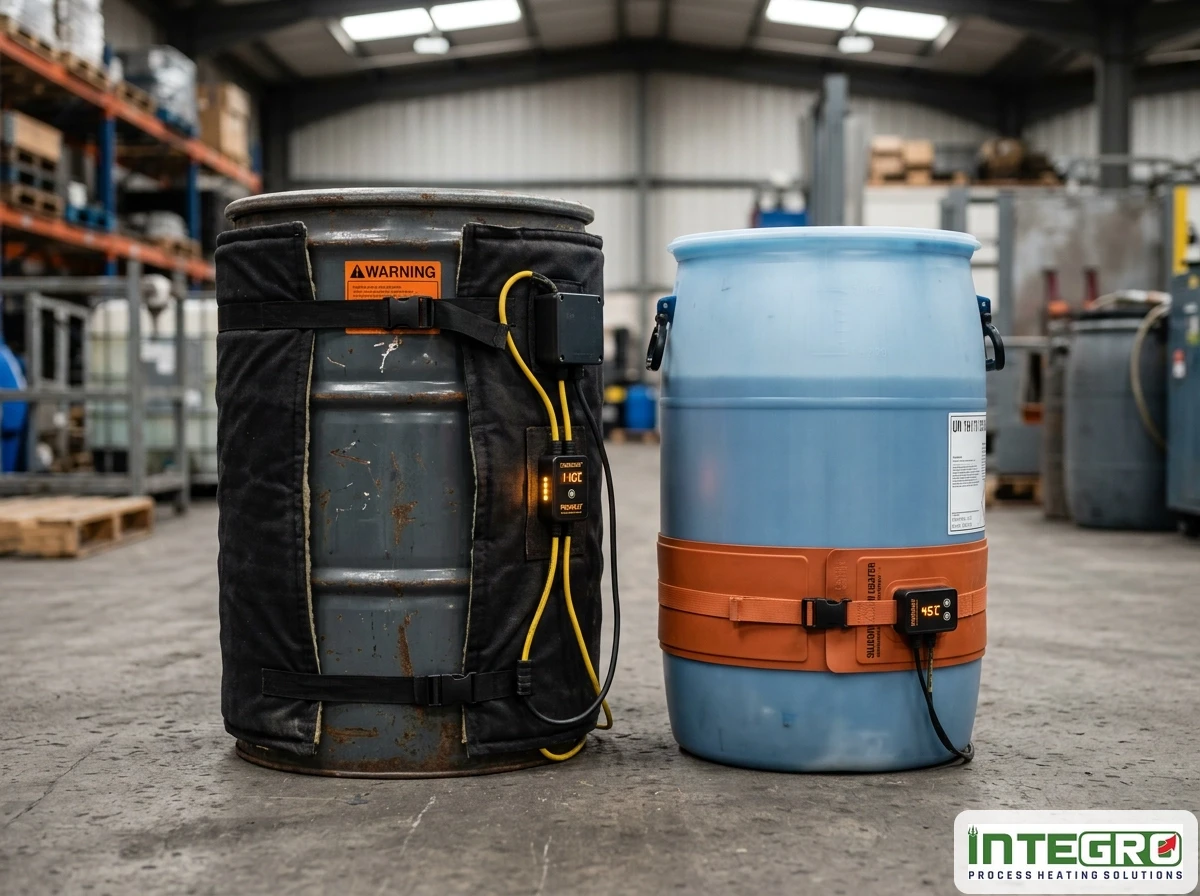
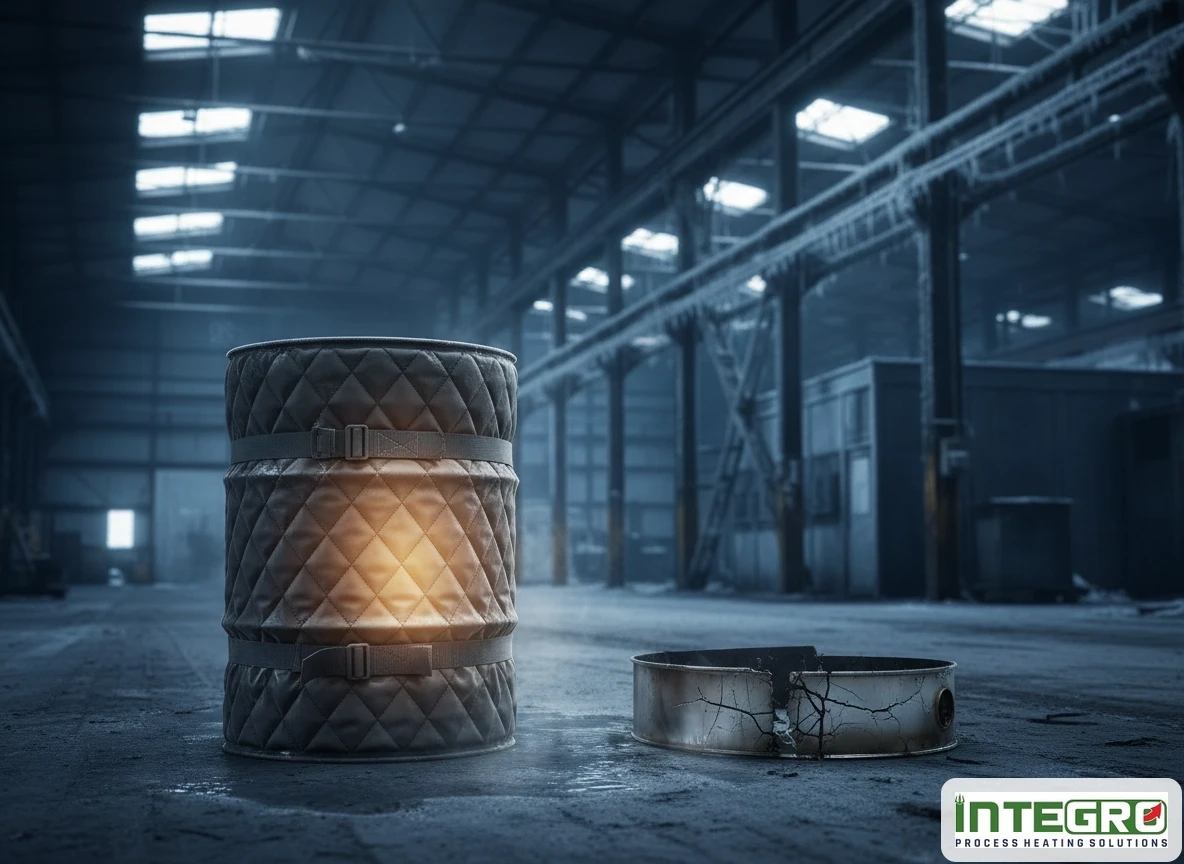
Picture a cold Tuesday morning on a production floor. A batch of industrial epoxy in a 55-gallon high-density polyethylene (HDPE) drum has turned into a solid block overnight. An operator grabs a rigid, high-watt-density metal band heater off the shelf, clamps it tightly around the plastic barrel, and cranks the dial. Thirty minutes later, the epoxy still isn't flowing. Instead, the sidewall of the container has warped, bubbled, and breached, spilling expensive resin across the concrete.
We've seen this exact scenario play out frequently. Moving away from hazardous open flames and makeshift water baths is a step in the right direction. But applying the wrong professional hardware creates an entirely new set of problems. The thermal transfer realities of metal versus plastic dictate completely different fluid warming strategies, and ignoring this physics leads to ruined assets.
Steel conducts heat efficiently. When you apply a high-intensity industrial drum heater to a metal barrel, the container rapidly disperses that thermal energy into the heavy oil or adhesive inside. HDPE, however, naturally acts as an insulator. It stubbornly resists transferring heat to the core. If you hit a poly drum with an aggressive, localized heat source, the energy pools directly at the surface. The container reaches its thermal limit and melts long before the viscous fluid inside drops its internal shear resistance enough to prevent pump cavitation.
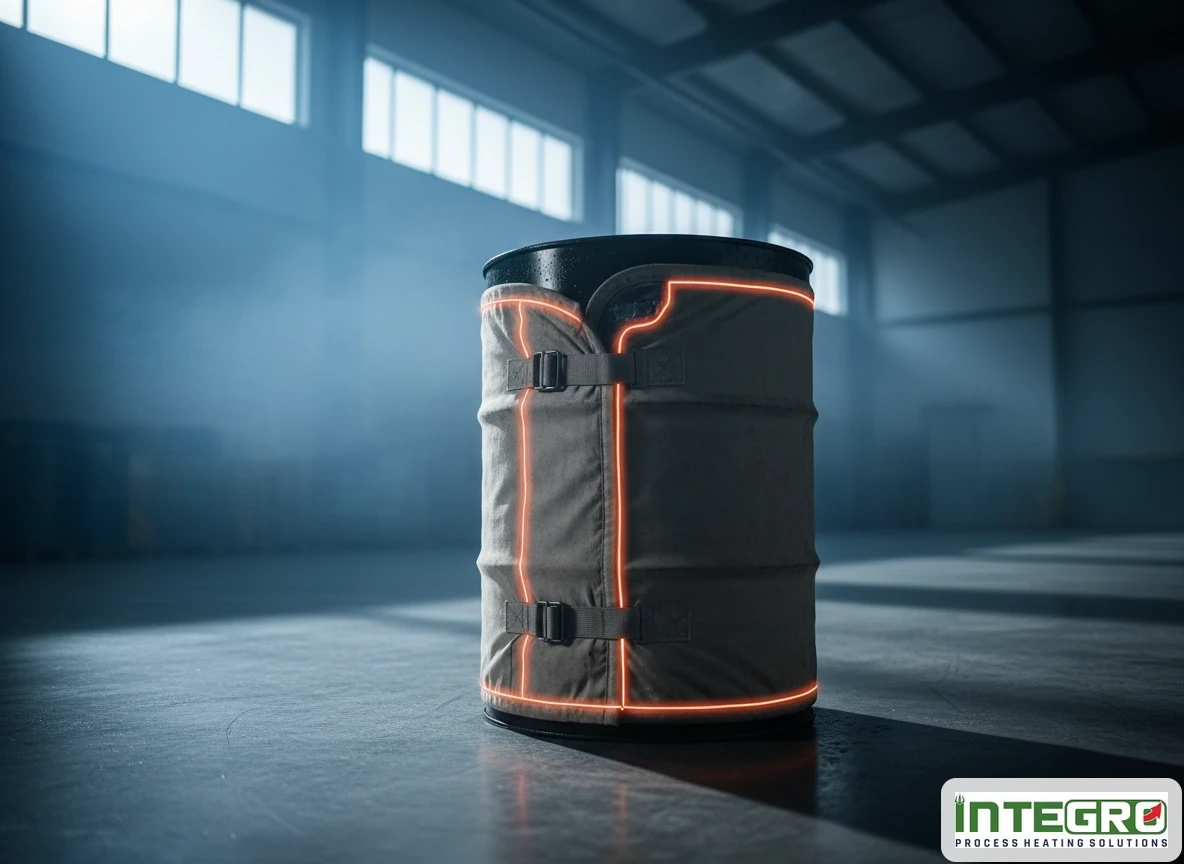
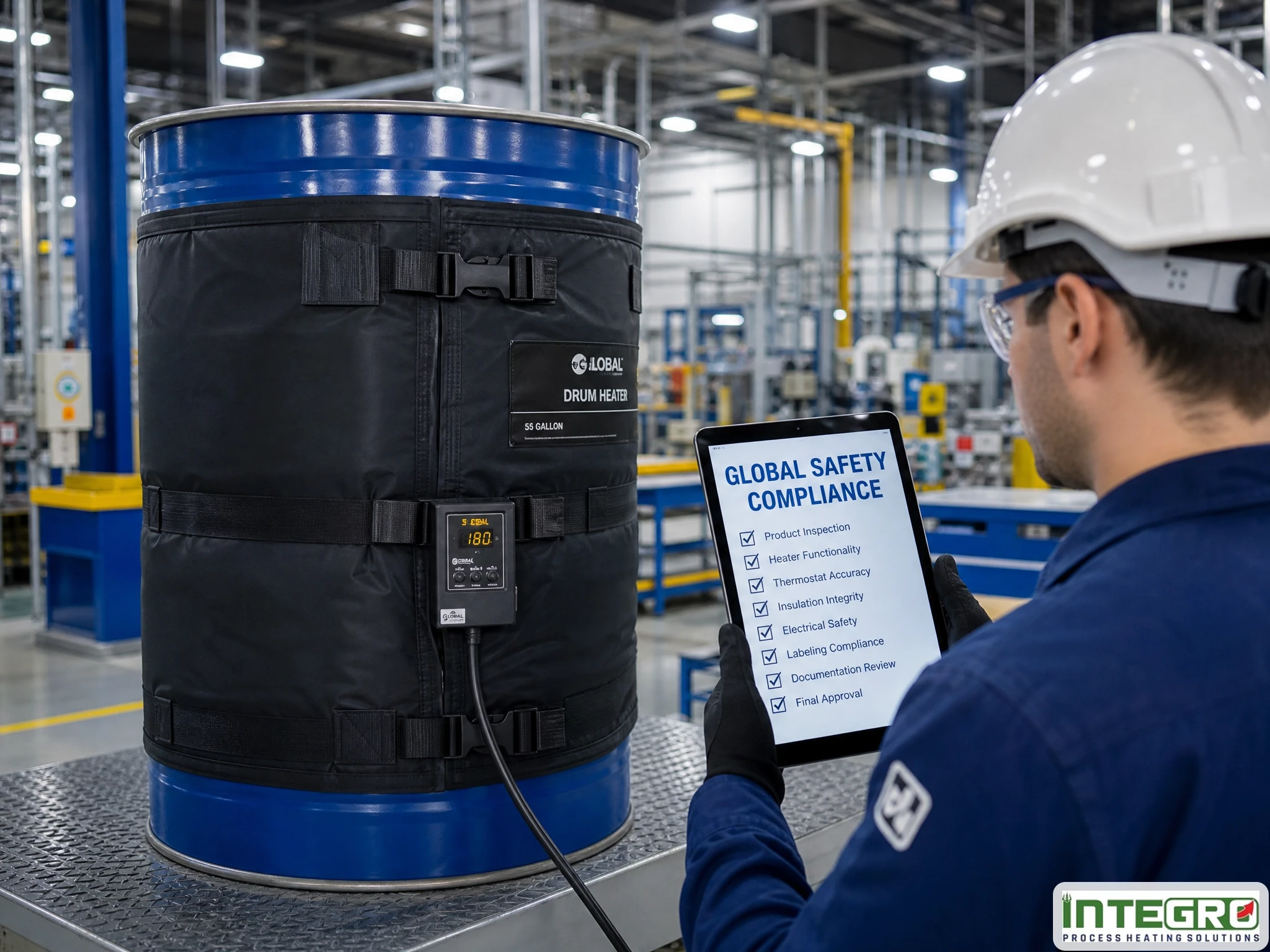
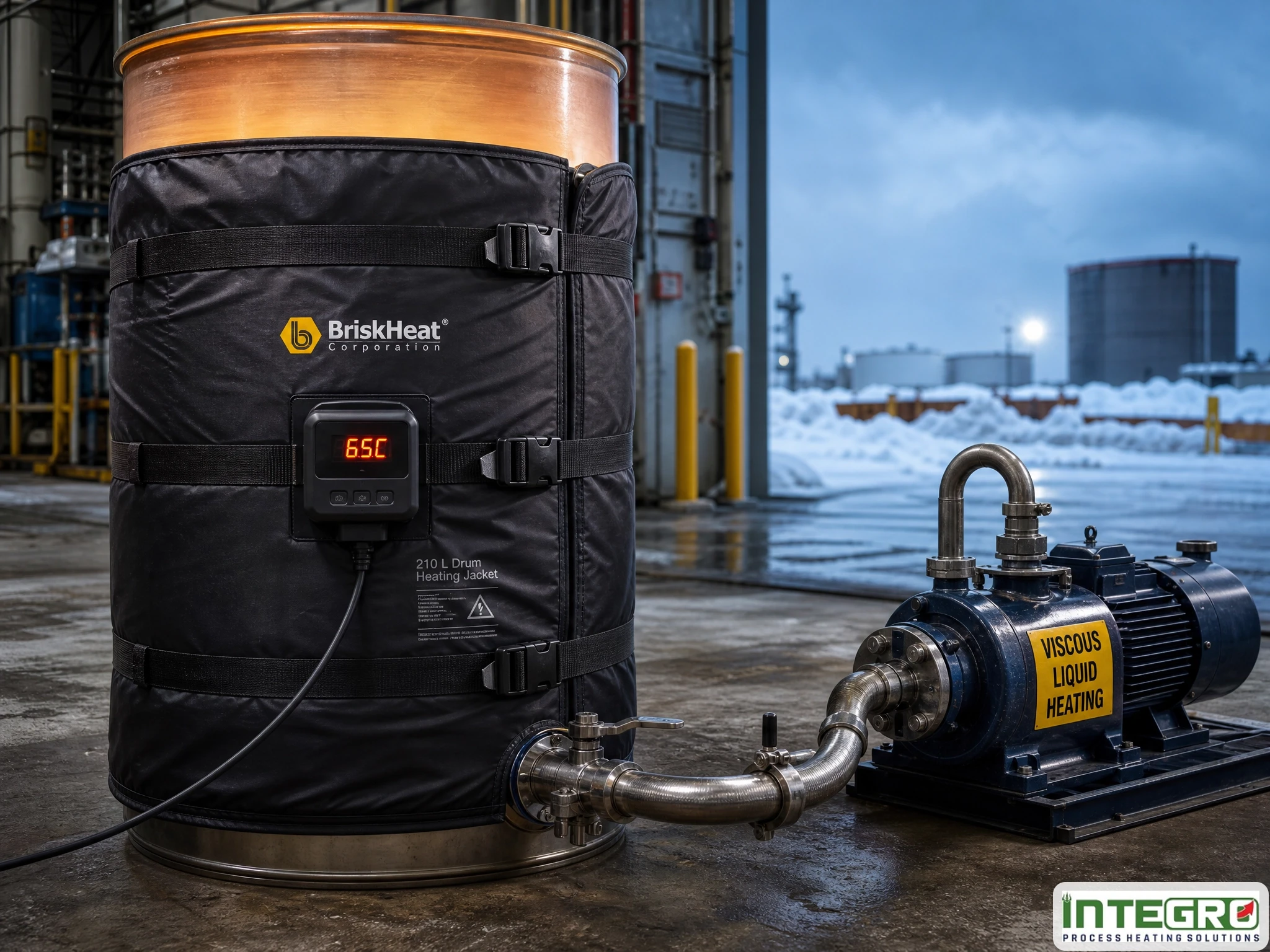
At Integro Process Heating Solutions, we map our engineered heating systems directly to these specific material constraints. You simply can't treat poly drums like steel ones. For plastics and temperature-sensitive chemicals, you need gentle, uniform heat distribution rather than concentrated intensity. That's exactly why a full-surface drum heating jacket makes sense here, wrapping the container to slowly raise the temperature without exceeding the structural limits of the plastic wall.
Admittedly, perfectly matched equipment doesn't always guarantee flawless flow on the first try. Ambient warehouse drafts or extremely low starting temperatures can still slow down the melting phase, requiring digital thermostats to continually adjust output. But matching your thermal output to the container's physical limits prevents a minor cold-weather bottleneck from turning into a hazardous environmental spill.
Bands, blankets, and base heaters: choosing the right setup
Knowing your container's thermal limits only solves half the equation. The other half requires matching hardware to your exact thermodynamic objective. Are you holding a pre-warmed epoxy at 80°F to maintain pumpability, or forcing a crystallized resin through a dense phase change? The hardware architecture changes entirely based on that answer.
Silicone band heaters deliver high-watt-density localized heat. They wrap the lower third of a vessel, relying heavily on internal convection currents to distribute thermal energy upward. For a standard Metal Drum Heating System, deploying a 1000W band works efficiently to maintain the baseline viscosity of heavy machine oils. But if you attempt to melt a solid block of crystallized resin with a single band, you'll scorch the product at the contact boundary while the core remains completely frozen. The thermal gradient is simply too extreme for localized application.
Phase-change applications demand uniform, low-watt-density coverage instead. A full-coverage Drum Heating Jacket envelopes the entire surface area, actively driving thermal energy inward from a 360-degree perimeter. This approach is critical for temperature-sensitive compounds where localized overheating degrades the chemical structure. By spreading 800W across 3,000 square inches rather than concentrating it into a narrow strip, you eliminate the risk of burning the fluid against the drum wall.
Base heaters operate differently. They introduce heat directly to the bottom chime to accelerate the natural upward convection of the fluid. We frequently pair these with insulated jackets for the most stubborn, high-viscosity materials. In our custom engineering work at Integro Process Heating Solutions, we rarely see base heaters succeed as standalone solutions in sub-zero warehouses. The ambient cold air strips away the thermal gain faster than conduction can replace it. You need the insulation to trap the energy.
Just as an engineered industrial underfloor heating system relies on massive surface area to regulate ambient facility temperatures efficiently, a complete Drum Heating System relies on maximum surface contact to minimize necessary wattage. The wider the distribution, the safer the process.
Honestly, no single thermal configuration works perfectly for every fluid dynamic profile. Viscosity curves are unforgiving, meaning the aggressive setup that successfully melts heavy petroleum sludge will almost certainly ruin a specialized pharmaceutical additive. Always map the fluid's specific heat capacity and maximum allowable surface temperature before deploying any hardware.
Securing your warehouse lines before the next cold snap
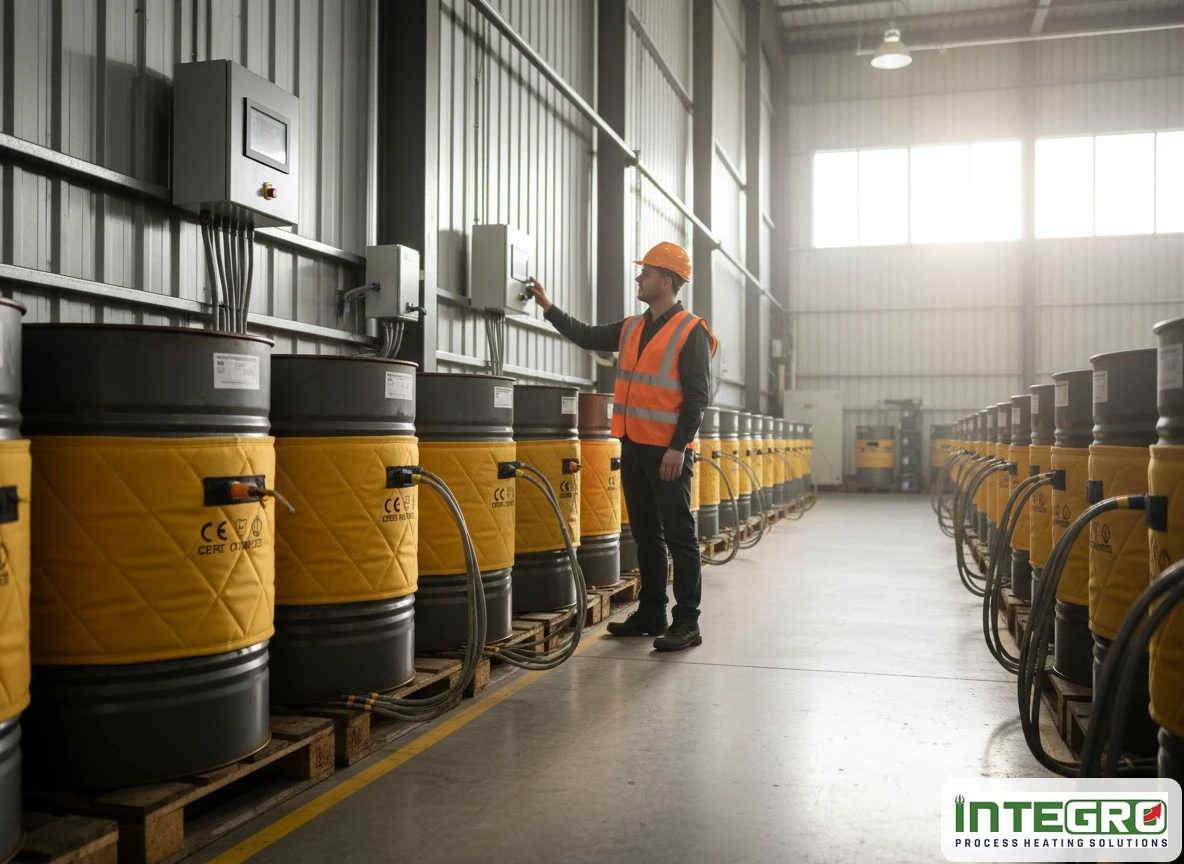
So, you've chosen between the silicone bands, insulated blankets, and base units. That's the easy part. The real friction happens when you try to deploy these systems the same week temperatures unexpectedly plummet.
Honestly, waiting until your pumps start whining to think about your winter strategy is a fast track to motor burnout. You don't want to be scrambling to thaw 55-gallon drums of industrial epoxy while your production line sits idle. I see facility managers make this mistake every single year. They treat cold weather like an unpredictable emergency rather than a scheduled maintenance event.
Pre-season preparation is where you actually protect your equipment investments. Start by auditing your storage areas right now. Identify which fluids are most sensitive to ambient drops and map out your dedicated zones for viscous liquid heating. It's much easier to stage your materials and secure them with flexible heating jackets before they turn into un-pourable sludge. Getting this right helps maintain proper pumpability across your entire floor, keeping internal shear resistance low so your impellers don't tear themselves apart through cavitation.
But hardware alone doesn't fix a bad process. You need to train your operators on the specific thermal limits of your containers. Slapping a high-watt heater on an HDPE drum because someone was in a hurry will just melt the plastic, leaving you with a massive, expensive spill. Results vary depending on your specific chemical makeup, but generally, controlled precision beats brute-force heating every time.
At Integro Process Heating Solutions, we often remind clients that engineered heating solutions are about predictability. You want uniform thermal management your team can actually rely on.
Walk your warehouse floor today. Are your transfer lines ready for a sudden 15-degree drop tonight, or are you just hoping the weather holds out?
Don't let winter slow down your production lines. Integro Process Heating Solutions builds reliable industrial drum heating systems that keep your viscous fluids flowing safely.
FAQ
Why do viscous liquids thicken so fast when the warehouse gets cold?
Fluid viscosity doesn't change on a straight line. When warehouse temperatures drop even a few degrees, heavy oils or resins thicken exponentially, which shoots up the internal shear resistance and creates a massive drag on your pumps.
Can I use the same drum heater on steel drums and plastic poly containers?
You really shouldn't. Steel handles high-watt-density band heaters just fine, but slapping that same rigid hardware onto an HDPE plastic drum can easily melt or warp the container walls. Always match your heating jacket's output to the container material's thermal limits.
What actually happens inside a pump when the fluid gets too cold?
When it's freezing, the pump has to pull way too hard to draw in thick liquid. That suction pressure drops below the vapor pressure, causing bubbles to form and violently collapse, which pits impellers and eventually causes motor burnout.
Are space heaters or hot water baths okay for warming up thick materials?
Honestly, most makeshift fixes like space heaters or open baths are a safety hazard and a waste of time. They don't provide uniform heat, they're hard to control, and they usually fail safety compliance checks.
How do I choose between a silicone band heater and a full-coverage blanket?
It depends on what you're trying to do. Silicone bands work well for basic temperature maintenance on metal drums, but if you're trying to melt a solid phase-change material like honey or resin without scorching it, you'll need a full-surface insulated jacket.