- By Admin
- Integro
- The delicate chemistry of SLES in cold storage
- What actually happens inside an overheated SLES drum?
- The local hotspot disaster (a real-world failure mode)
- Why traditional band heaters fail SLES and SLS
- The safe way: introducing controlled, uniform heating
- Selecting the right gear for SLES temperature maintenance
- A checklist for your next SLES heat cycle
- Frequently Asked Questions
The delicate chemistry of SLES in cold storage
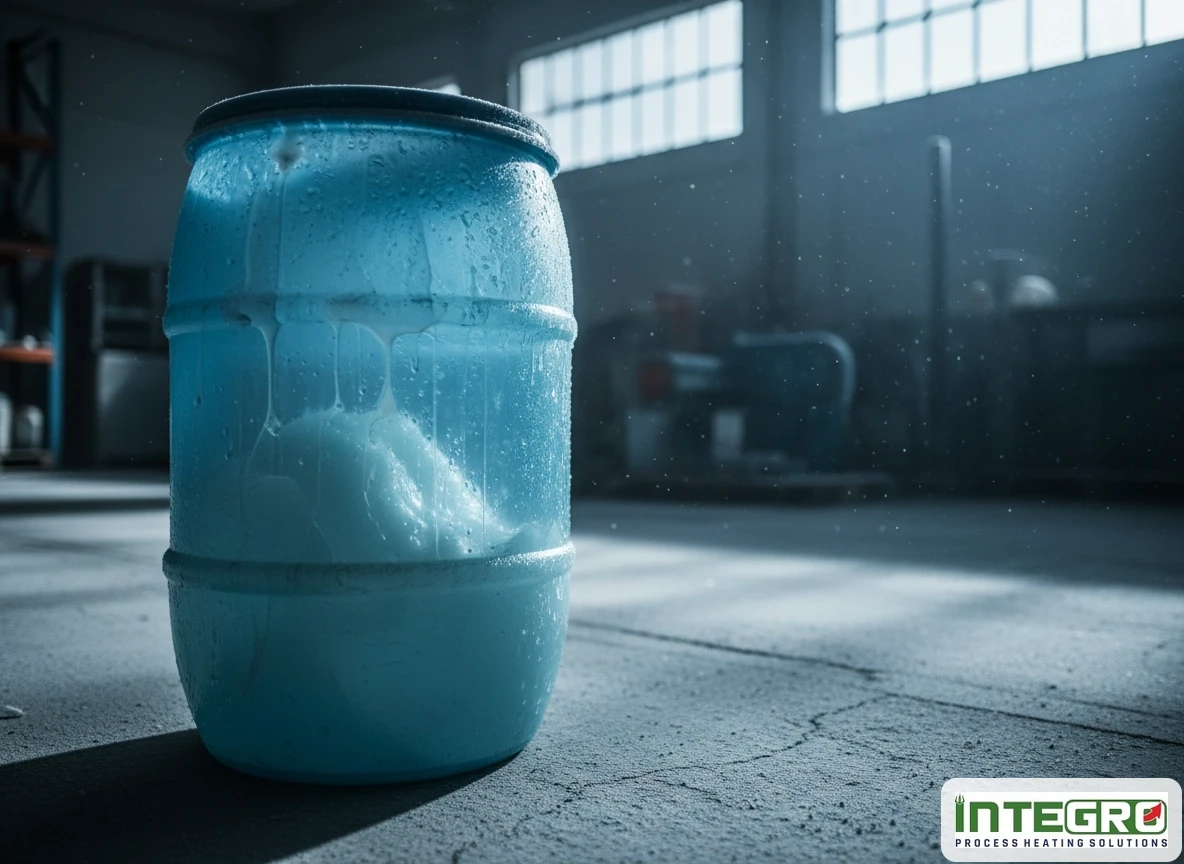
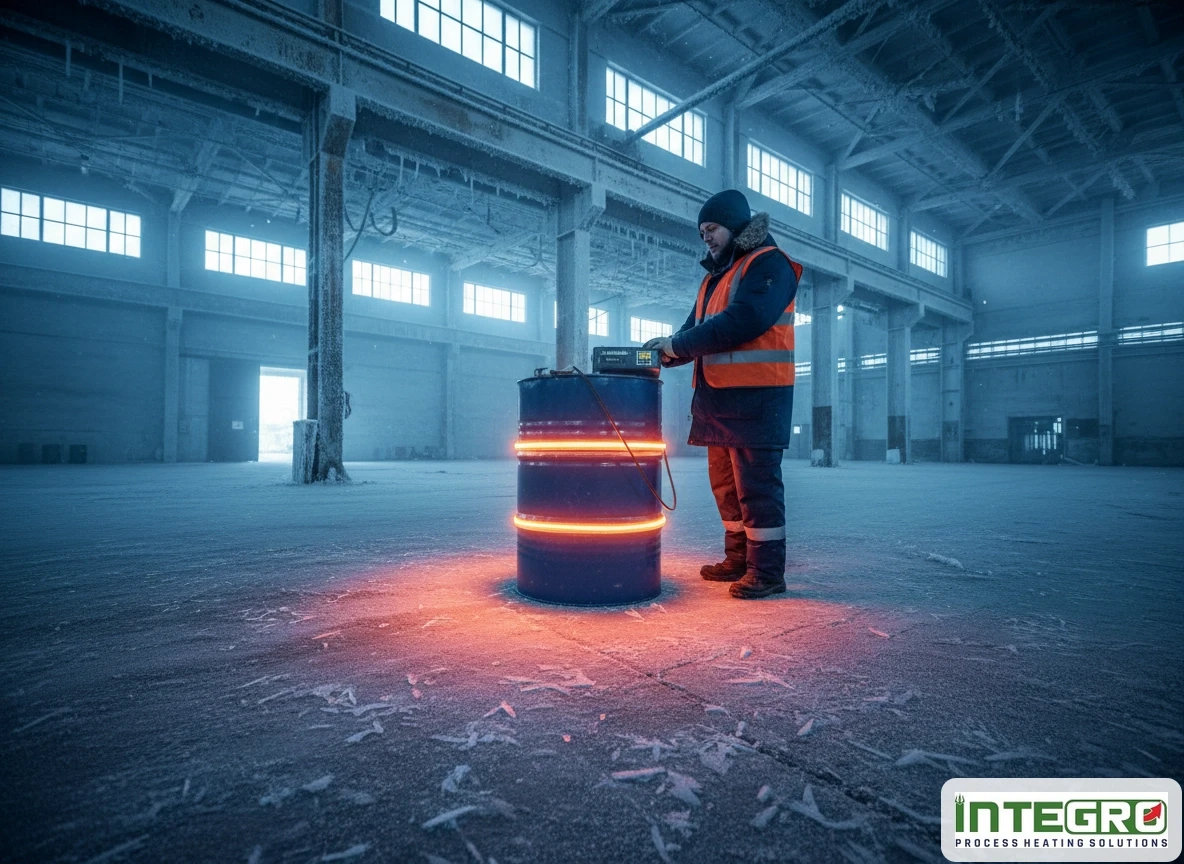
Picture a 200-litre drum of 70% active SLES sitting in a freezing winter warehouse. It's no longer a liquid; it has turned into a stubborn, unpumpable gel. To fix it, an operator grabs a standard high-temperature band heater, cranks the dial, and waits. If you've seen this happen, you already know the result. The batch is ruined.
We see this all the time at Integro Process Heating Solutions. Operators often treat viscous liquid heating like a brute-force mechanical chore. But it's actually a delicate chemical balancing act. Cranking up the heat doesn't get the product ready to pump any faster. Instead, blasting Sodium Laureth Sulfate with concentrated heat just scorches the outer layer while the core stays frozen solid.
SLES is incredibly sensitive to heat. If you expose it to temperatures above 40°C or 50°C for too long, you trigger acid-catalyzed hydrolysis. This reaction breaks the surfactant down into lauryl alcohol and sulfuric acid. When this happens, the pH drops, a nasty sulfur smell fills the room, and the liquid actually gets thicker instead of thinning out.
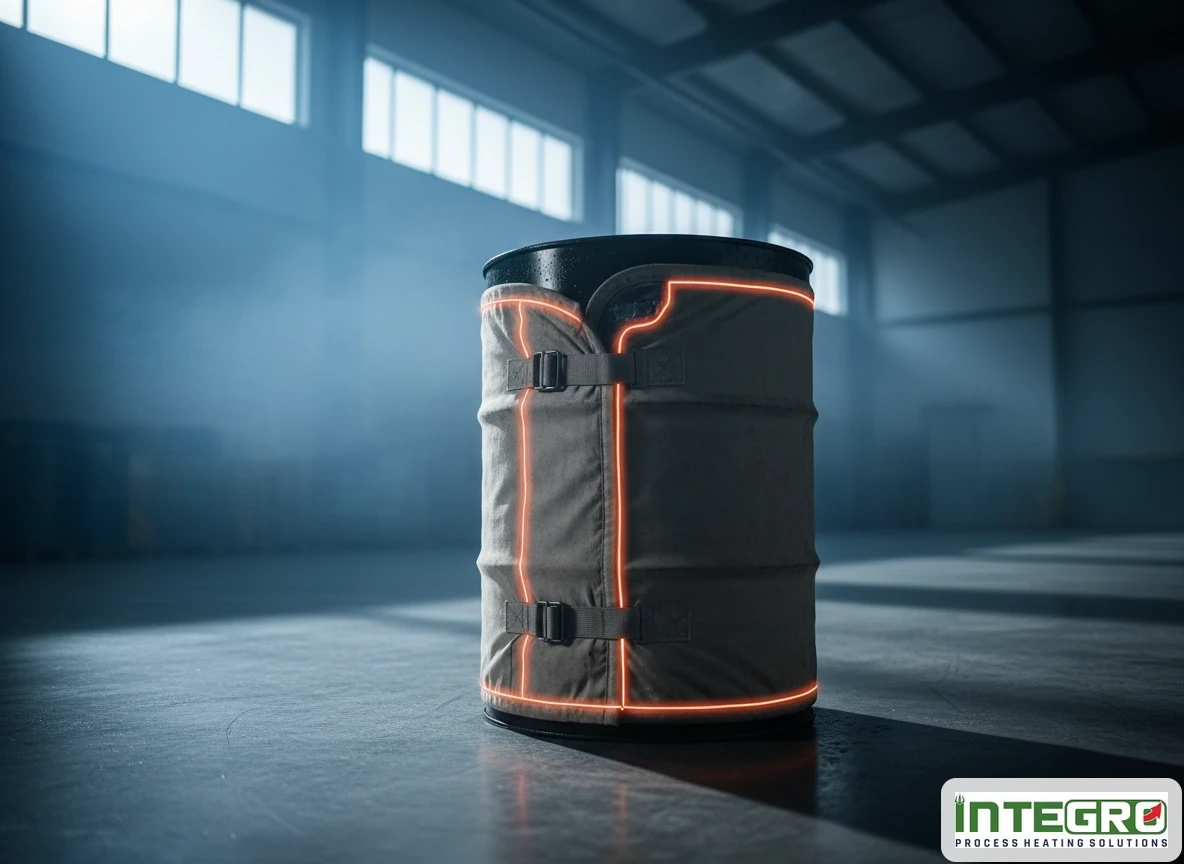
Your choice of heating equipment determines whether the chemical survives. For instance, putting rigid steel band heaters on plastic HDPE drums is a recipe for disaster. If the watt density goes over 0.6 W/cm², the plastic wall melts. That's why you need precise temperature control. Specialized drum heating jackets solve this because they wrap the container in uniform, low-intensity heat.
Sure, exact temperature limits can vary slightly depending on the buffers in your specific batch. But the physics of heat transfer don't change. You need gentle, distributed warmth to keep the surfactant intact. Using controlled flexible heating jackets keeps your raw materials safe and prevents pump cavitation.
What actually happens inside an overheated SLES drum?
When that 70% active SLES turns into an unyielding paste on a freezing warehouse floor, the immediate instinct is to blast it with heat. Operators grab whatever is nearby. Usually, that means slapping a standard high-watt-density steel band heater around the plastic barrel.
But SLES isn't just viscous. It's chemically fragile. When localized skin temperatures exceed 40°C to 50°C, the surfactant undergoes rapid acid-catalyzed hydrolysis. You aren't just melting a cold gel at this point. You're permanently severing molecular bonds. The SLES breaks down directly into lauryl alcohol and sulfuric acid.
Instead of thinning out to become pumpable, the localized scorched product actually thickens. The pH plummets. Sulfurous degradation odors start venting from the container, and the batch is ruined before the frozen core even begins to soften. This chemical reality is why we at Integro Process Heating Solutions consistently warn against uncontrolled base heating. Assuming higher temperatures equal faster pumping readiness is a catastrophic operational mistake.
The container itself rarely survives this brute-force approach either. Standard rigid heaters often push watt densities far beyond 0.6 W/cm². When applied to high-density polyethylene (HDPE), that concentrated thermal stress easily melts right through the plastic walls. This is exactly why relying on an unmonitored industrial drum heater without digital thermal profiling creates massive chemical spill risks.
You need uniform, conductive heat transfer to safely drop the viscosity. Wrapping the container in a flexible heating jacket provides distributed, low-intensity thermal radiation. The physics here are straightforward. You warm the perimeter slowly, allowing the fluid to naturally convect without ever crossing the 40°C threshold.
If your facility is sourcing drum heating jackets for sensitive surfactants, low watt-density is non-negotiable. We regularly transition manufacturers away from outdated bands toward engineered flexible jacket drum heaters or a dedicated drum heating chamber for high-volume operations. Using proper insulated heating jackets traps the required energy against the barrel wall while a digital controller actively prevents overheating.
Whether you're specifying an ibc heating jacket for 1000-litre totes or standard industrial drum heaters for 210-litre drums, precision temperature control is what ultimately prevents pump cavitation downstream. The reality is that many drum heating jackets manufacturers and global industrial drum heaters exporters completely ignore the delicate chemistry of ethoxylated sulfates. They just sell raw thermal output. But raw heat destroys SLES.
The local hotspot disaster (a real-world failure mode)
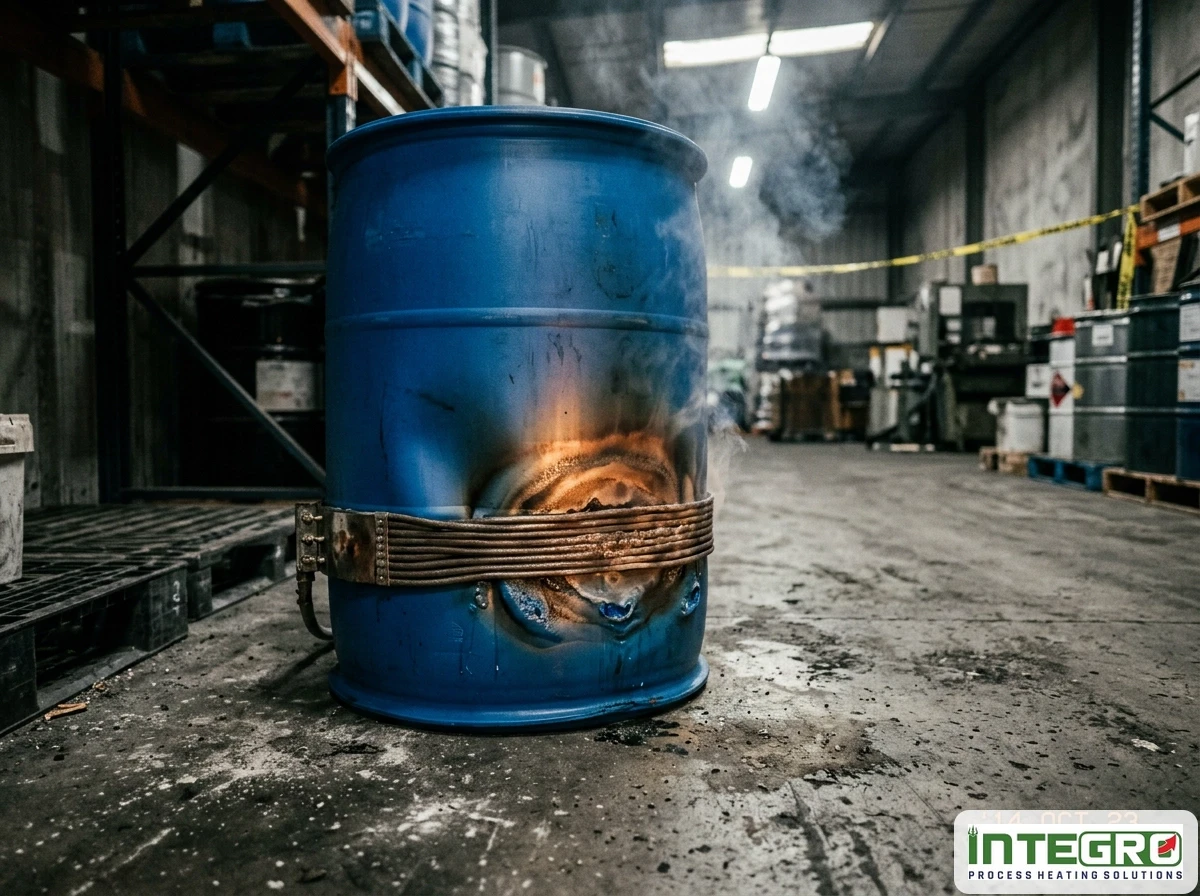
Picture a freezing February morning on the warehouse floor. A standard plastic container of 70% active SLES has transformed into an unpumpable, gel-like paste overnight. The operator needs the production line moving immediately. So they grab a rigid, steel-only industrial barrel heater, strap it tightly against the high-density polyethylene (HDPE) wall, and crank the dial. They assume higher heat equals faster pumping readiness.
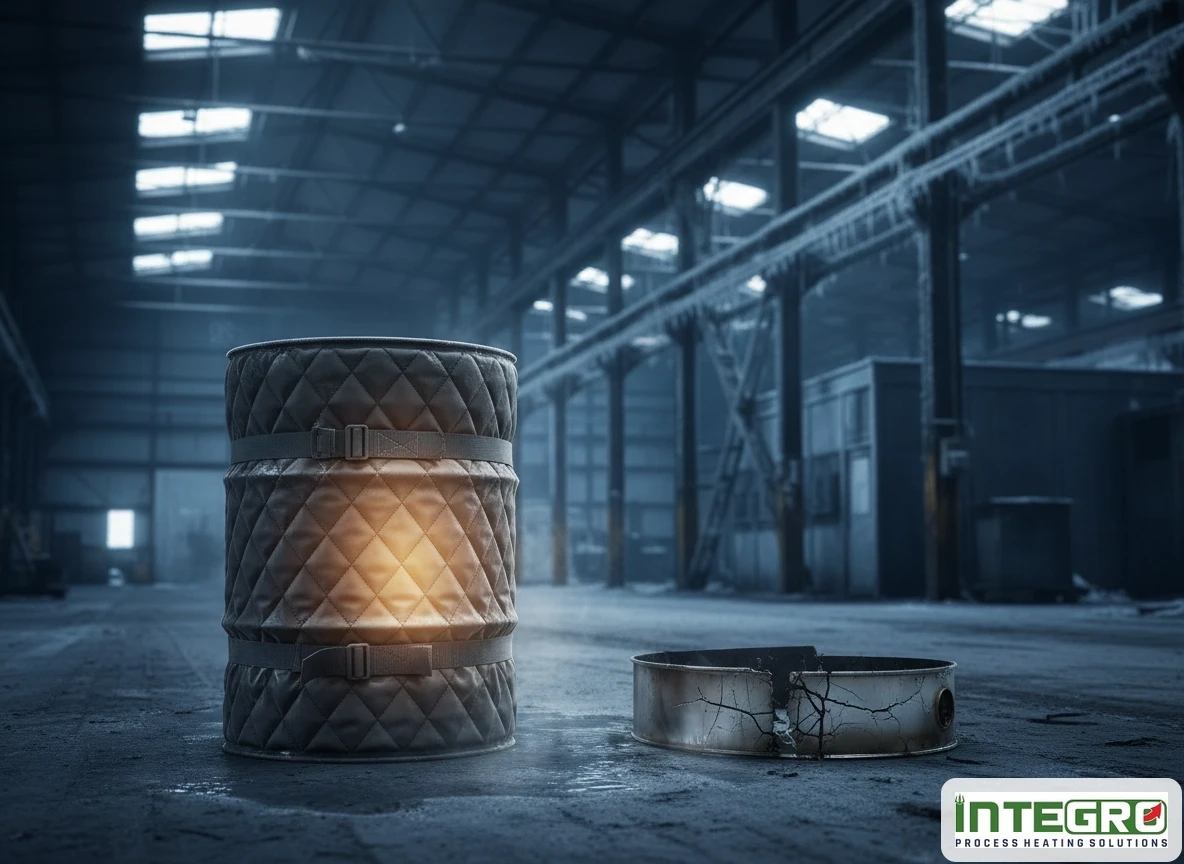
That assumption usually destroys the batch. Because standard steel bands easily exceed a watt density of 0.6 W/cm², they create intense, localized thermal stress. The perimeter product scorches while the core remains a frozen block. Within an hour, a distinct sulfurous odor fills the air,the exact chemical degradation we just mapped out. The operator has failed to monitor skin temperature versus core temperature. While this doesn't always result in a full structural breach, the localized chemical damage is almost guaranteed. Often, the plastic sidewall simply softens and melts under the unmonitored baseline heat.
We see this specific failure mode constantly at Integro Process Heating Solutions. Operations teams try to push past a delicate chemical barrier with aggressive mechanics. It is the exact same mindset trap we see when facilities force heavy sludge through failing physical screens before finally accepting they need an industrial waste water evaporator. Thermal engineering requires precision, not aggression.
Proper 200 Litre / 210 Litre Drum Heating demands uniform conductive transfer. Rigid bands apply localized trauma, whereas full-coverage drum heating jackets distribute thermal radiation evenly across the entire surface area. By wrapping the container in insulated heating jackets, you protect the surfactant’s chemical integrity and prevent the rapid pH drop associated with edge scorching. Whether you are scaling up with an IBC heating jacket or replacing crude base elements with flexible jacket drum heaters, low-intensity heat is the only reliable way to preserve active matter and minimize pump cavitation risks.
Why traditional band heaters fail SLES and SLS
Standard high-watt-density steel band heaters routinely deliver watt densities exceeding 0.6 W/cm². This level of heat ruins high-density polyethylene (HDPE) containers. When surface temperatures exceed 120°C, plastic drums lose structural integrity and fail. It is a predictable outcome. The melted plastic and ruined batch we just discussed happen because basic physics clashes with chemical sensitivity.
Heavy steel bands suit rugged applications, not sensitive surfactants. They subject the perimeter of an industrial drum heater setup to intense, localized thermal stress. SLES closest to the drum wall scorches and degrades. Meanwhile, the core remains a frozen, unpumpable paste. Immersion heaters cause similar issues. Dropping a hot metal rod directly into a 70% active SLES mixture burns the product around the element and introduces contamination risks. Furthermore, ignoring pH buffering limits while pushing surface temperatures triggers rapid, acid-catalyzed hydrolysis.
The threshold for plastic drums
If your heating equipment exceeds 0.6 W/cm², you risk melting the HDPE sidewalls. Do not assume higher heat equals faster pumping. It does not. To safely soften the entire volume without degrading the chemical, you need distributed, low-intensity thermal radiation.
At Integro Process Heating Solutions, we treat this as a thermal engineering challenge rather than a brute-force heating task. It is similar to wastewater management. Facilities eventually realize they need a waste water evaporator instead of pushing failing filters past their limits. Chemical handlers must similarly recognize when crude heating methods fail.
Steel band heaters work well for heating heavy, stable oils in metal barrels where localized scorching is not an issue. However, sensitive compounds like SLES and SLS require precise thermal control. Using flexible jacket drum heaters with digital controllers distributes heat evenly across the entire surface area. This approach protects the chemical integrity of the batch, maintains surfactant activity, and reduces pump cavitation risks during extraction.
The safe way: introducing controlled, uniform heating
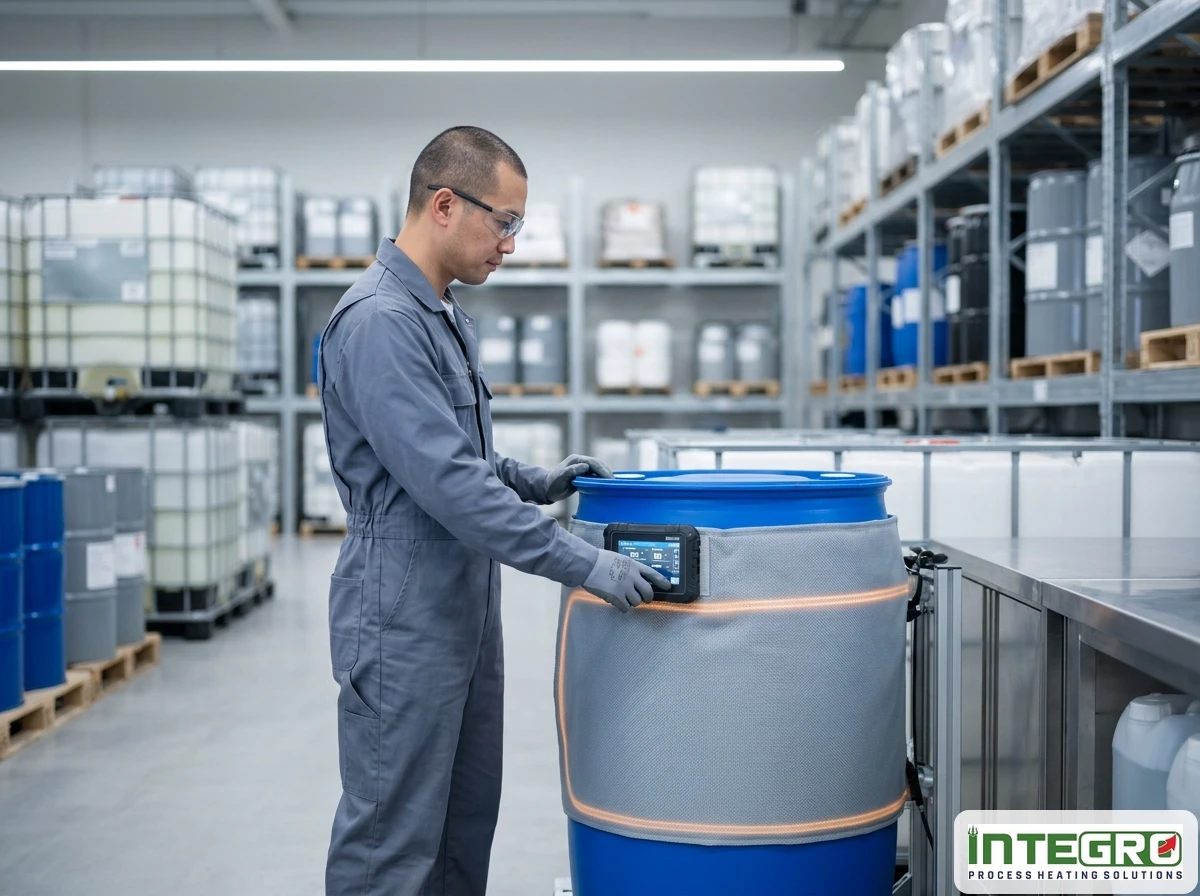
We know concentrated heat destroys SLES. The fix is aggressively simple. Stop attacking the drum with localized fire. Spread the thermal load across the entire surface area.
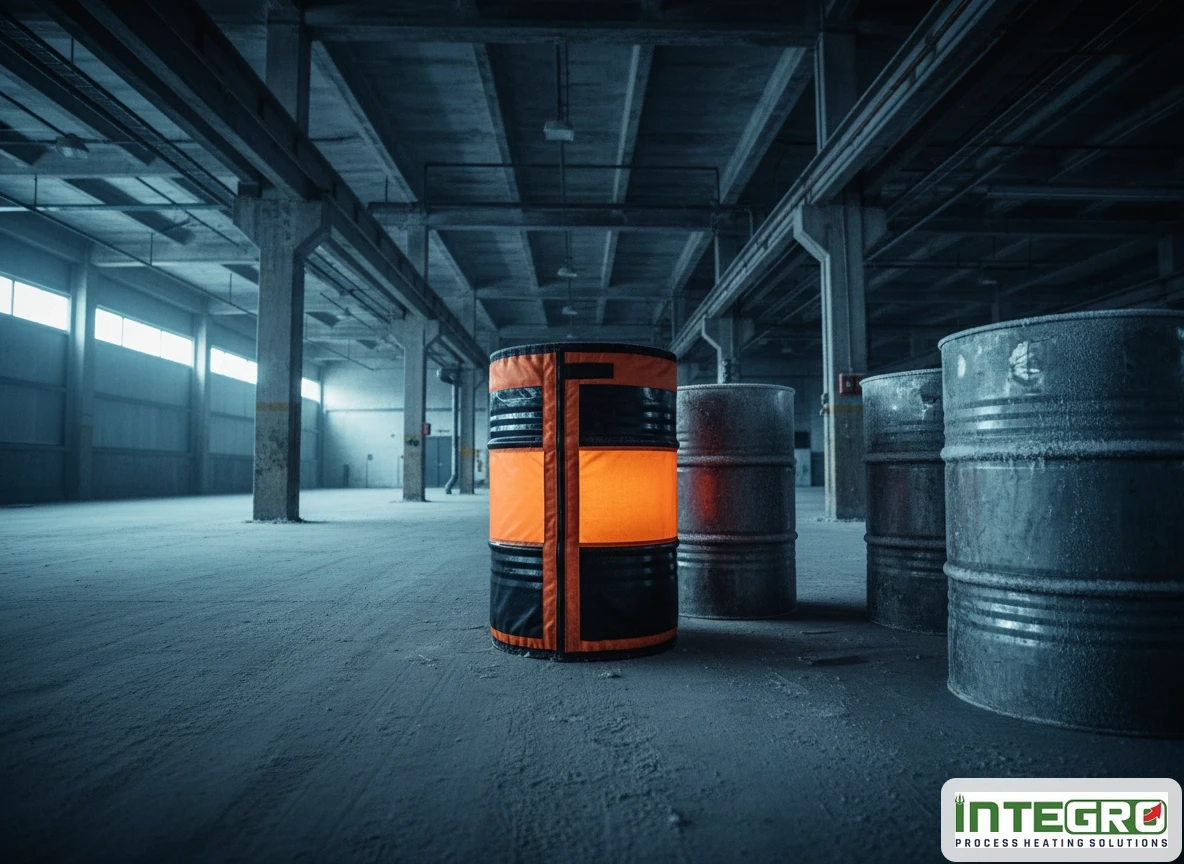
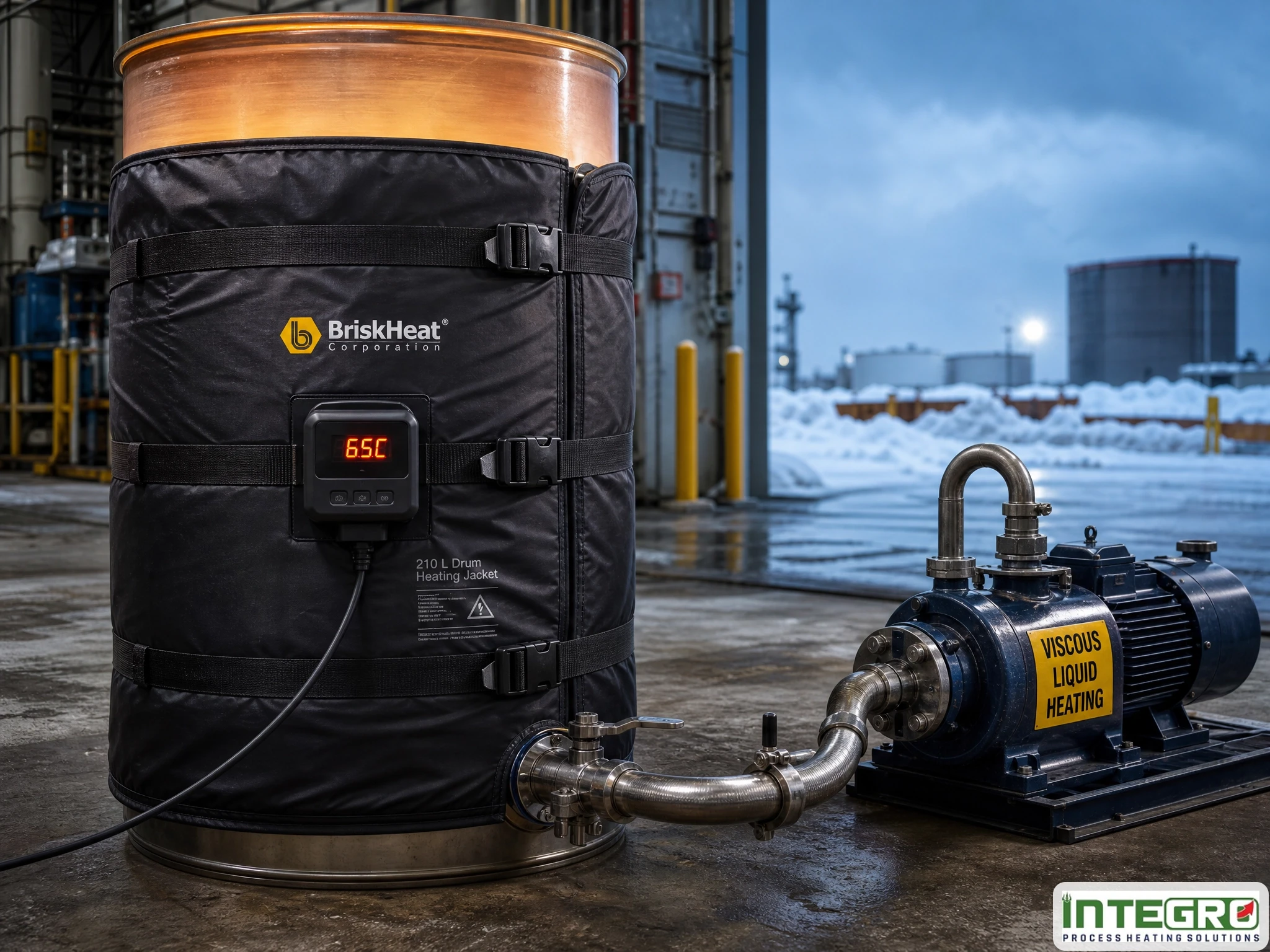
You need controlled and uniform heating. A full-coverage Drum Heating Jacket does exactly this. It wraps the entire 200-litre or 210-litre container. Instead of blasting a tiny strip of plastic with high wattage, it delivers a gentle, distributed thermal radiation.
At Integro Process Heating Solutions, we design these systems because old-school band heating is a chemical liability. A properly engineered jacket keeps the watt density safely below the critical 0.6 W/cm² threshold that melts high-density polyethylene.
The heat transfers conductively through the drum wall. Slowly. Evenly. We're relying on low-intensity flexible heating jackets equipped with digital controllers to lock in exact parameters. You'll set the limit to 35°C, and it stays there. No perimeter hotspots. No scorching the outer edges while the core remains a frozen block of paste.
Managing bottom heat loss
Sometimes a jacket isn't enough on its own. Cold winter warehouse floors pull heat straight out of the bottom of the vessel. And operators often react by cranking a localized base heater to maximum. That's a terrible idea. It just cooks the bottom layer of product while leaving the top frozen.
You must use the jacket and base in tandem for proper temperature maintenance for drums. A low-wattage base heater prevents cold sinks. But the insulated jacket is what stops ambient warehouse air from stripping heat away from the sides.
Is this slower than cranking a massive steel band to maximum? Yes. Physics demands patience here. You can't cheat thermodynamics without degrading the surfactant. Honestly, assuming higher heat equals faster pumping readiness is the most expensive mistake plant operators make. Heat-up times vary depending on ambient warehouse drafts and starting temperatures, so this doesn't always guarantee a specific timeframe. But the chemical limits of SLES are absolute. Overheating SLES is just bad engineering. Control the surface temperature, insulate the vessel, and let uniform conductive heat do the work.
Selecting the right gear for SLES temperature maintenance
When specifying equipment for SLES, the margin for error shrinks to a few degrees. We've already seen that exceeding 40°C triggers acid-catalyzed hydrolysis. So the procurement question isn't just about reaching a target temperature, but how gently the equipment can get there.
Matching watt density to drum material
You can't treat high-density polyethylene (HDPE) and cold-rolled steel interchangeably. Any 200 Litre / 210 Litre Drum Heating setup requires careful calibration based on the thermal conductivity of the vessel. For plastic drums, the hard limit for watt density sits at 0.6 W/cm². Push past that metric, and you risk structural wall failure long before the core SLES softens.
An Industrial Drum Heater designed for steel might operate efficiently at higher wattages. But applying that same unit to an HDPE container invites disaster. We typically specify full-coverage insulated jackets with integrated digital PID controllers and PT100 sensors. This specific configuration ensures that skin temperatures never outpace the thermal mass absorption rate of the surfactant.
Base versus side heating configurations
Relying on a single heat vector rarely works for 70% active SLES. Deploying a high-wattage base heater alone often scorches the bottom layer while the upper strata remain a frozen block.
Instead, pairing a low-intensity base plate with an HF5-C style Drum Heating Jacket creates a distributed thermal envelope. And this dual-axis approach drastically minimizes pump cavitation risks during extraction. At Integro Process Heating Solutions, we analyze these exact thermal dynamics when engineering custom arrays. Whether scaling up heavy chemical lines or adapting systems for domestic and commercial heating, the physics of conductive transfer remain stubborn.
The reality of digital thermostatic control
Capillary thermostats lack the precision this chemical demands. They drift over time. A 5°C variance might seem trivial on a spec sheet, but in a cold warehouse, that drift dictates whether you pump smooth liquid or degrade your batch into sulfuric acid.
Admittedly, upgrading to digital, multi-zone jackets increases initial capital expenditure, and this doesn't always hold true for less sensitive raw materials. Yet for sodium laureth sulfate, the return on investment is measured entirely in batches you don't destroy. You're buying thermal insurance, not just a heating element.
A checklist for your next SLES heat cycle
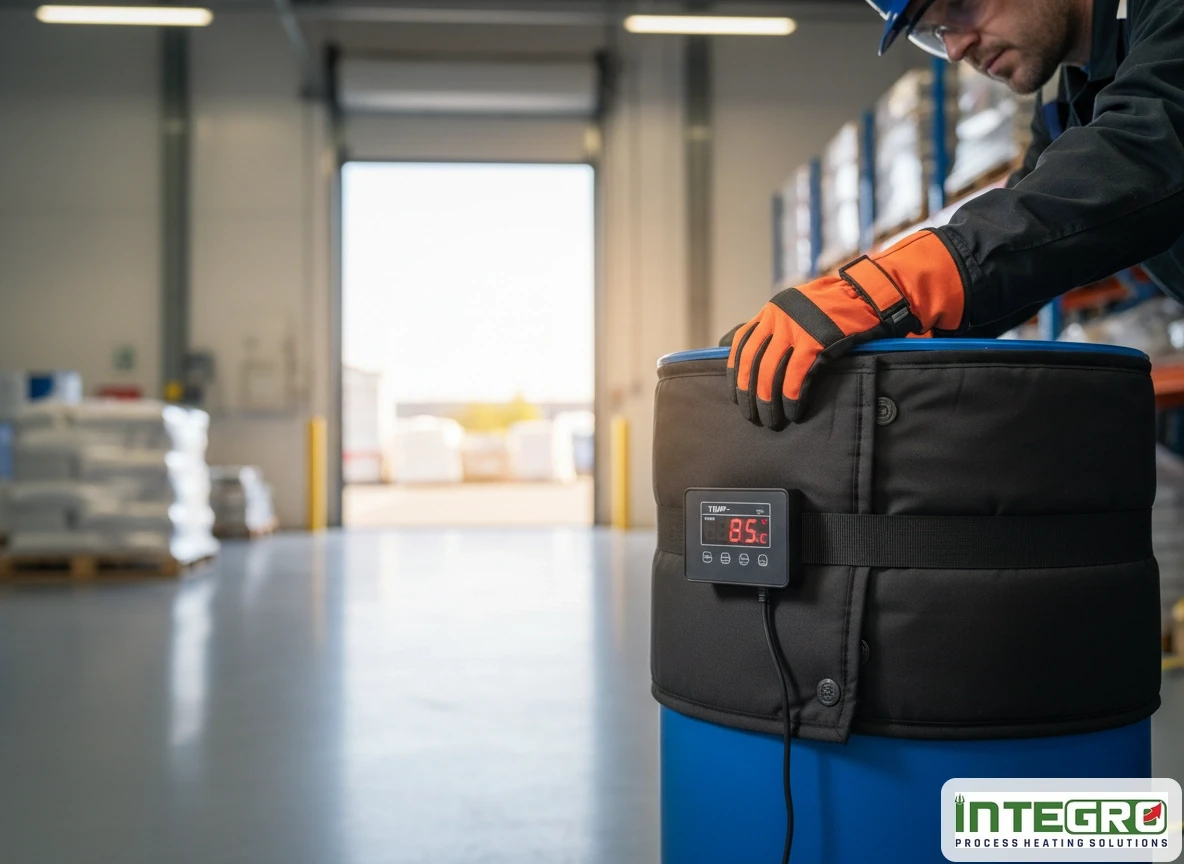
You’ve got the right low-watt-density jacket on the container. So, what’s the actual sequence when you stare down a solid block of surfactant?
Let's break down the exact process we use at Integro Process Heating Solutions before we ever flip a switch. It's all about patience. Pushing 70% active SLES too fast is exactly how you trigger acid-catalyzed hydrolysis.
First, verify your watt density. Confirm your jacket stays under that 0.6 W/cm² threshold, especially with HDPE plastics.
Next, set the digital controller. Cap the thermostat at 40°C. Never assume that setting it to 60°C thaws the core faster. It won't. You'll just scorch the perimeter and ruin the batch.
Then, establish a thermal baseline. Check the ambient air and the drum skin temperature before applying power. (While this sequence works for most batches, results vary depending on how cold your specific facility gets).
Now, initiate the warming cycle. The primary objective is controlled and uniform heating. You want a slow, steady thermal soak. Check the core temperature after a few hours rather than relying on surface readings.
Finally, evaluate the viscosity. You're looking for material pumpability improvement, not hot liquid. Once the core softens enough to prevent pump cavitation, drop the controller to a low setpoint. This allows safe, ongoing temperature maintenance for drums until your production line needs them.
If you're constantly fighting winter gel states, scaling up to dedicated drum heating chambers fundamentally changes your warehouse operations. Why keep babying individual barrels when you could stabilize the whole pallet?
Tired of dealing with scorched batches and ruined chemical drums? Integro Process Heating Solutions builds custom insulated heating jackets that keep your SLES at the exact right temperature without the hotspots.
Frequently Asked Questions
Why does SLES turn into a gel in cold warehouses?
High-active SLES (like 70% concentrations) naturally thickens and forms a semi-solid paste when temperatures drop below room temp. It's not a defect in the chemical itself, but rather its standard physical response to cold storage, which makes pumping nearly impossible without gentle warming.
What temperature should I avoid when heating SLES drums?
You'll want to keep things under 40°C to 50°C. Push past that limit and you risk triggering acid-catalyzed hydrolysis, which breaks down your surfactant and ruins the active matter in the drum.
Can I use standard metal band heaters on plastic HDPE drums?
Honestly, that's a recipe for disaster. Rigid steel bands often exceed safe watt densities and can easily melt the plastic sidewalls of standard 200 or 210-litre drums if they aren't properly regulated.
How do drum heating jackets prevent chemical degradation?
Unlike harsh immersion rods or localized base heaters, flexible heating jackets wrap the entire container and distribute low-intensity heat evenly. That way, you get smooth material flow without creating the localized hotspots that trigger sulfurous odors and pH drops.